
Time to end secret data laboratories—starting with the CDC
The American people are waking up to the fact that too many public health leaders have not always been straight with them. Despite housing treasure…
Thought Leader: Marty Makary

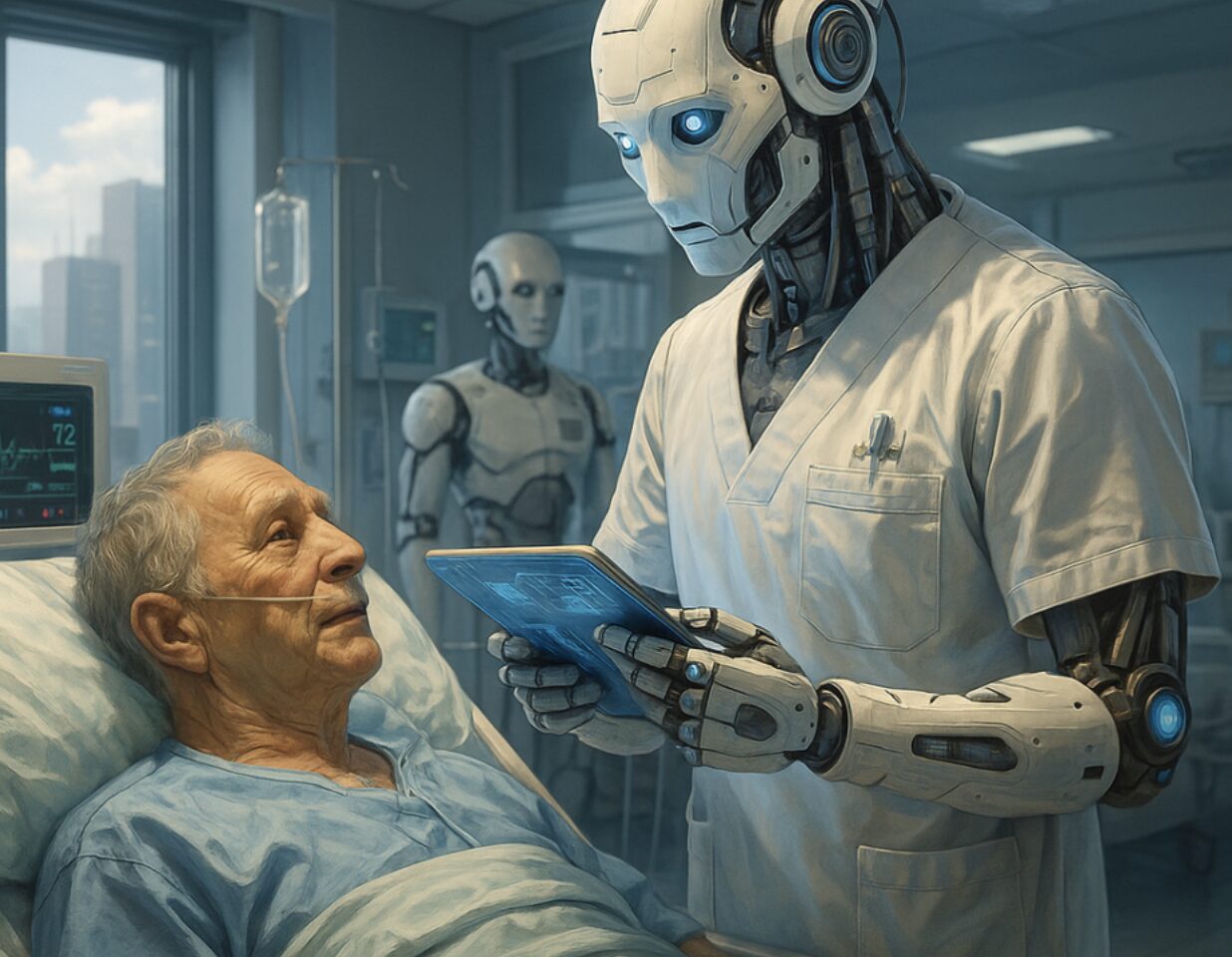
In this article, Andrew Busch examines how humanoid robots are beginning to change healthcare, from surgical settings to everyday hospital operations. As healthcare systems face labor shortages, rising costs, and growing demand, these robots are increasingly used to support clinical staff by handling repetitive, physically demanding, or time-sensitive tasks.
Busch outlines the technologies enabling this shift, including natural language processing, computer vision, tactile sensing, and cloud-based machine learning, which allow humanoid robots to interact with patients and operate in clinical environments. The article also addresses challenges surrounding safety, ethics, cost, regulation, and patient trust, particularly as humans form new relationships with robotic caregivers. Through market context and real-world examples, Busch frames humanoid AI as a significant development shaping the future of hospitals, surgery, and patient care.
Andrew Busch is an economist, futurist, and the first Chief Market Intelligence Officer for the U.S. government. Known for his highly engaging and insight-driven keynotes, Busch helps audiences make sense of economic uncertainty by translating complex data, policy shifts, and emerging trends into clear, actionable opportunities.
Drawing on deep research across the economy, public policy, elections, and transformative forces like AI, Busch connects today’s disruptions to tomorrow’s growth. His forward-looking perspective is grounded in venture capital investment patterns—offering a rare window into where markets, industries, and innovation are headed over the next decade. Bring Andrew Busch to your next keynote event with WWSG. Contact us today.
Time to end secret data laboratories—starting with the CDC
The American people are waking up to the fact that too many public health leaders have not always been straight with them. Despite housing treasure…
Thought Leader: Marty Makary
Scott Gottlieb: How well can AI chatbots mimic doctors in a treatment setting?
This is an Op-ed by WWSG exclusive thought leader, Dr. Scott Gottlieb. Many consumers and medical providers are turning to chatbots, powered by large language…
Thought Leader: Scott Gottlieb
Sara Fischer: The AI-generated disinformation dystopia that wasn’t
This piece is by WWSG exclusive thought leader, Sara Fischer. Amid the craziest news cycle in recent memory, AI-generated deepfakes have yet to become the huge truth…
Thought Leader: Sara Fischer
Andrew Busch: AI In Construction, Engineering, & CRE
Thought Leader: Andrew Busch
Andrew Busch on How AI Is Transforming Global Power
Thought Leader: Andrew Busch
Andrew Busch: Robots In Farming
Thought Leader: Andrew Busch