Doom: The Politics of Catastrophe by Niall Ferguson review
(Evening Standard) – From plagues and volcanic eruptions to the current Covid pandemic, mankind has always been faced with catastrophes.
Thought Leader: Niall Ferguson

This is what the auto industry wants people to see: sparkling factories turning reclaimed lead into batteries for Ford, Toyota, GM and the rest.
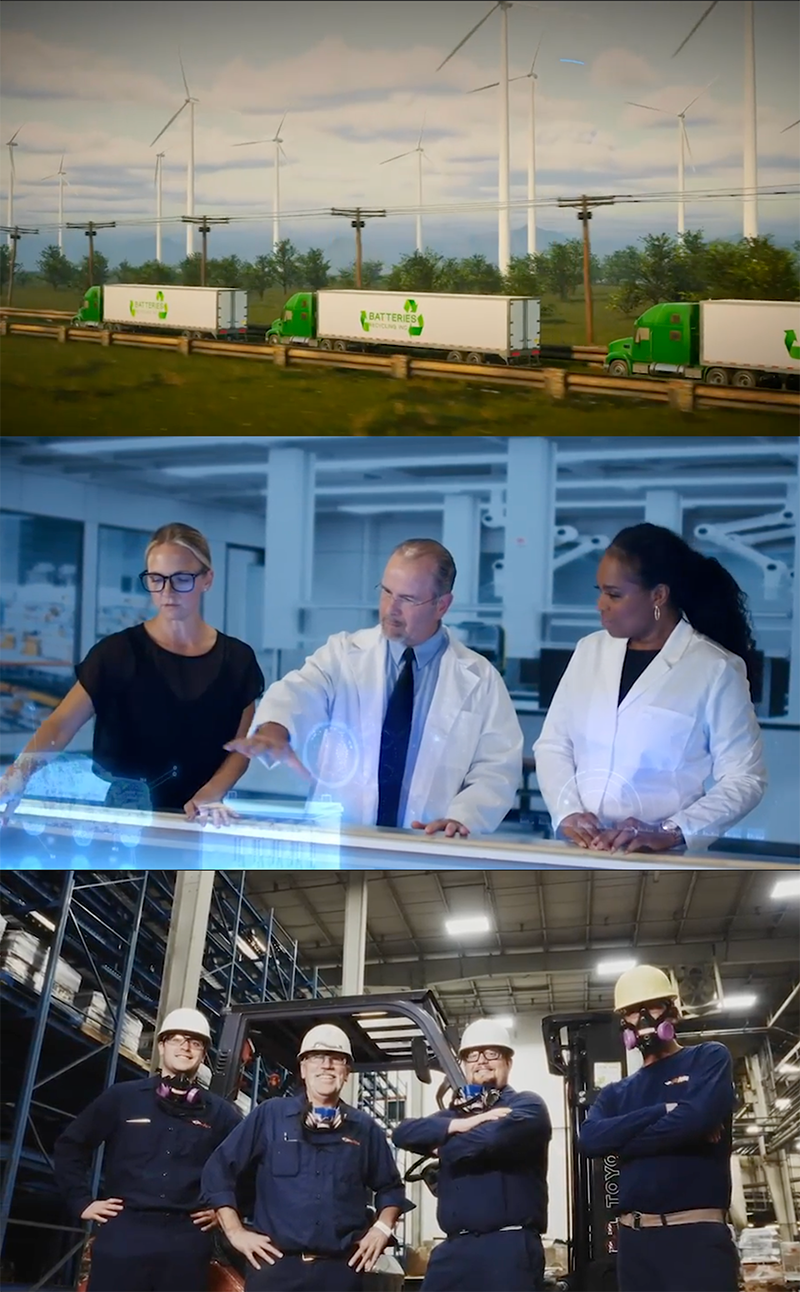
But in Africa’s lead recycling capital, reality looks very different.
Factories are poisoning people. We know because we tested them.
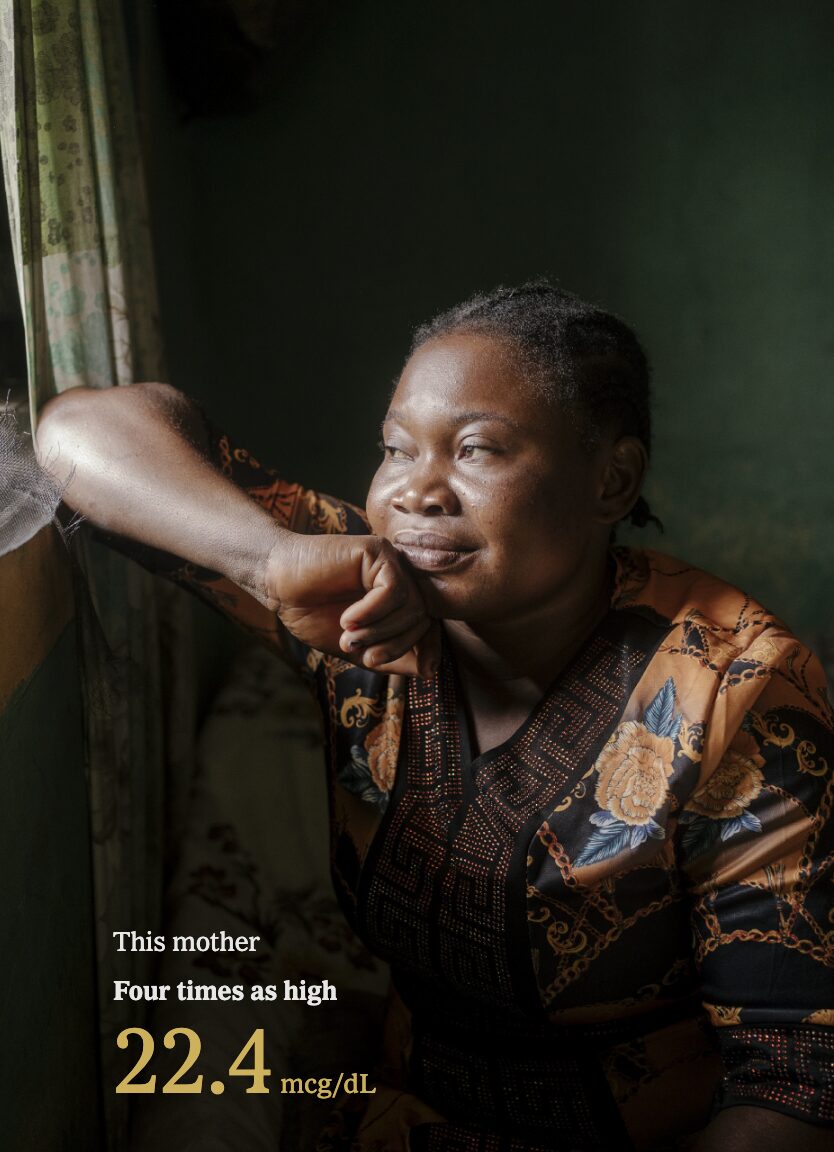
This dirty lead goes into American cars.
POISONOUS DUST falls from the sky over the town of Ogijo, near Lagos, Nigeria. It coats kitchen floors, vegetable gardens, churchyards and schoolyards.
The toxic soot billows from crude factories that recycle lead for American companies.
With every breath, people inhale invisible lead particles and absorb them into their bloodstream. The metal seeps into their brains, wreaking havoc on their nervous systems. It damages livers and kidneys. Toddlers ingest the dust by crawling across floors, playgrounds and backyards, then putting their hands in their mouths.
Lead is an essential element in car batteries. But mining and processing it is expensive. So companies have turned to recycling as a cheaper, seemingly sustainable source of this hazardous metal.
As the United States tightened regulations on lead processing to protect Americans over the past three decades, finding domestic lead became a challenge. So the auto industry looked overseas to supplement its supply. In doing so, car and battery manufacturers pushed the health consequences of lead recycling onto countries where enforcement is lax, testing is rare and workers are desperate for jobs.
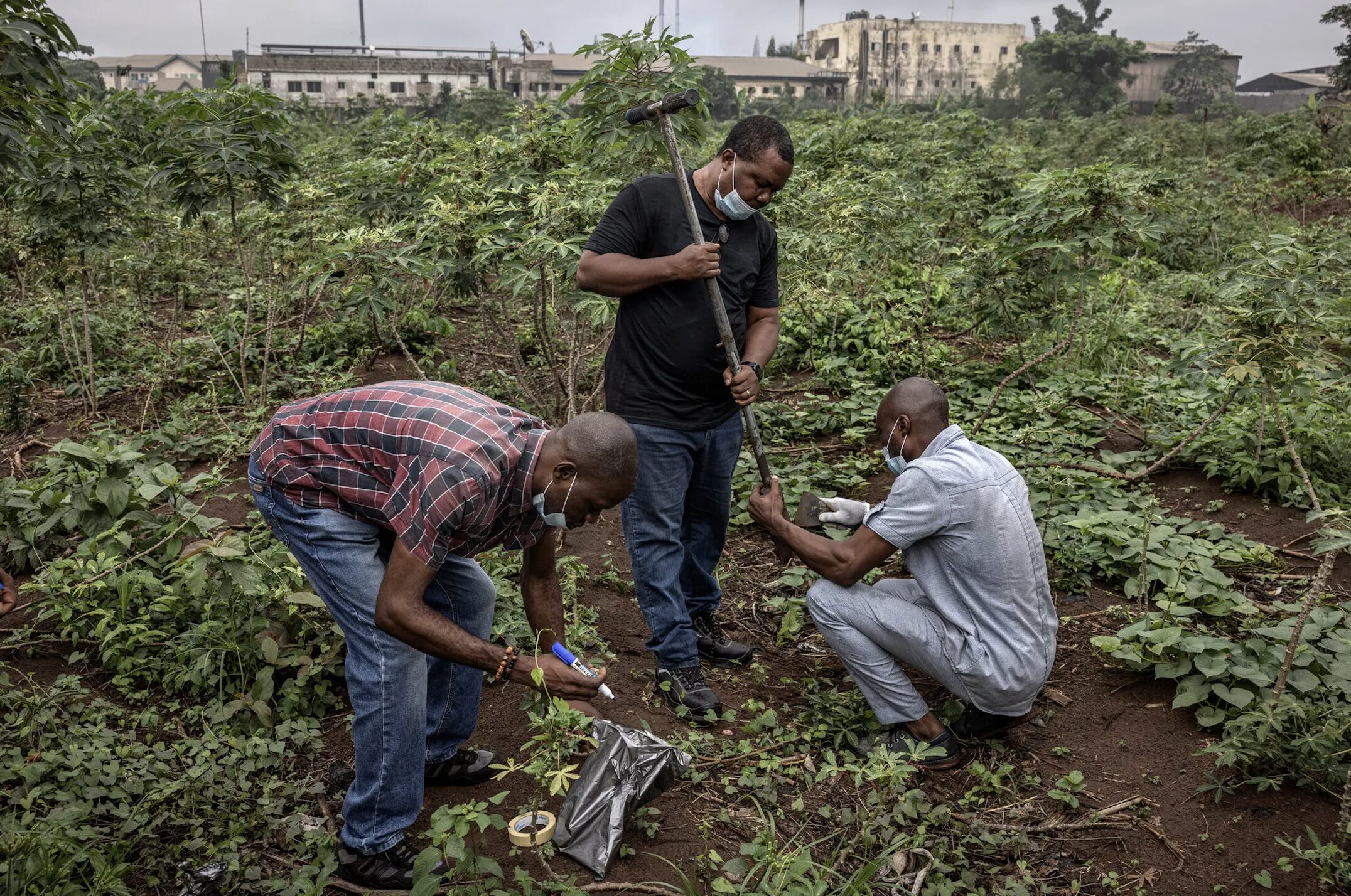
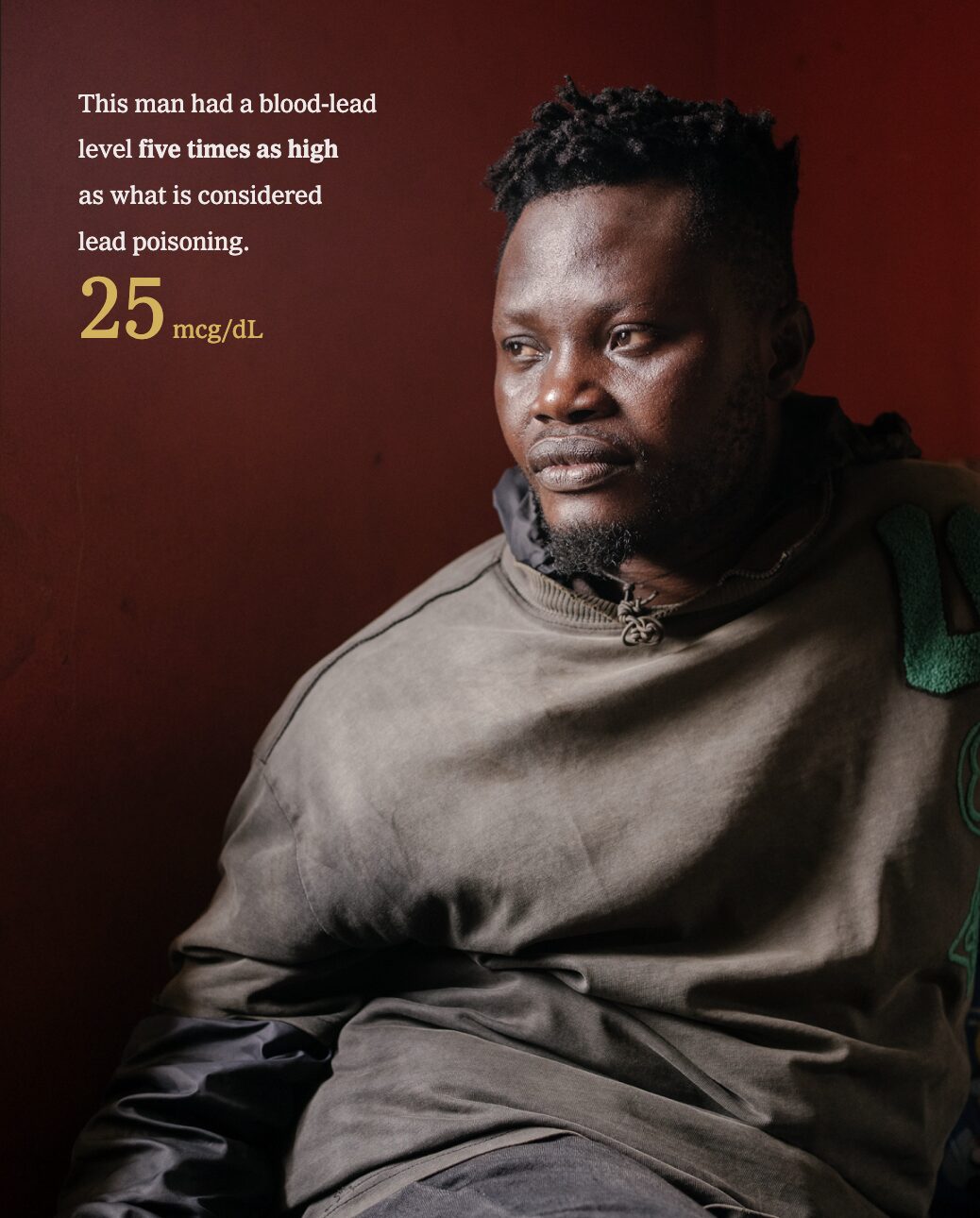
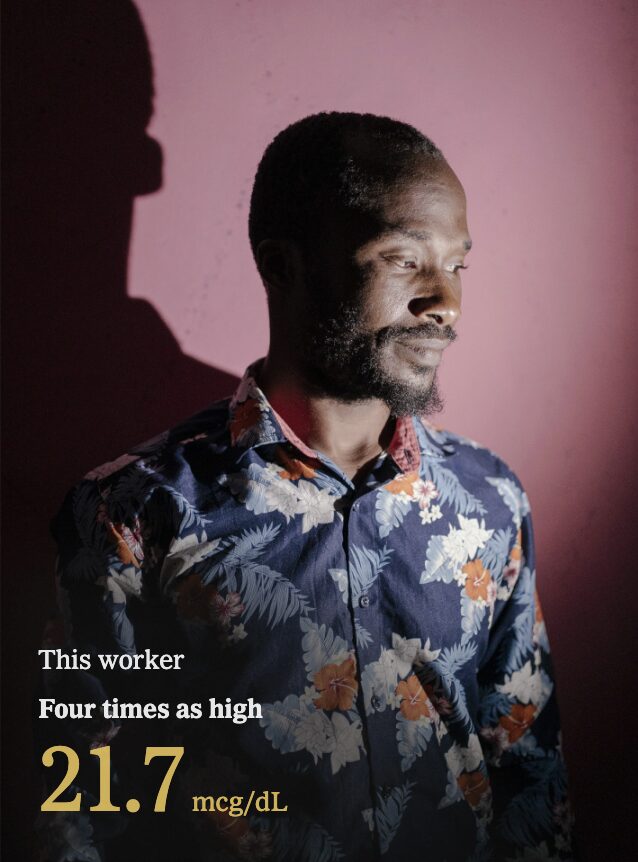
Seventy people living near and working in factories around Ogijo volunteered to have their blood tested by The New York Times and The Examination, a nonprofit newsroom that investigates global health. Seven out of 10 had harmful levels of lead. Every worker had been poisoned.
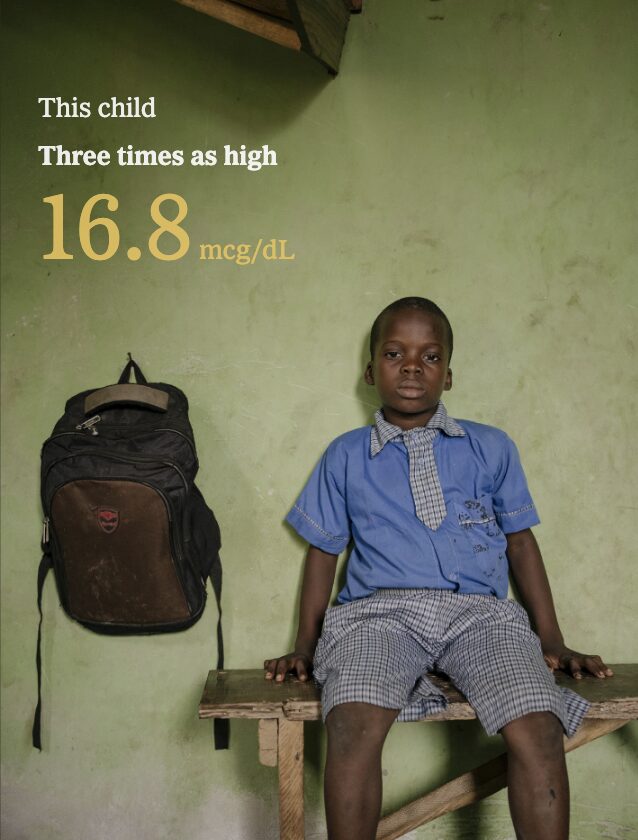
More than half the children tested in Ogijo had levels that could cause lifelong brain damage.
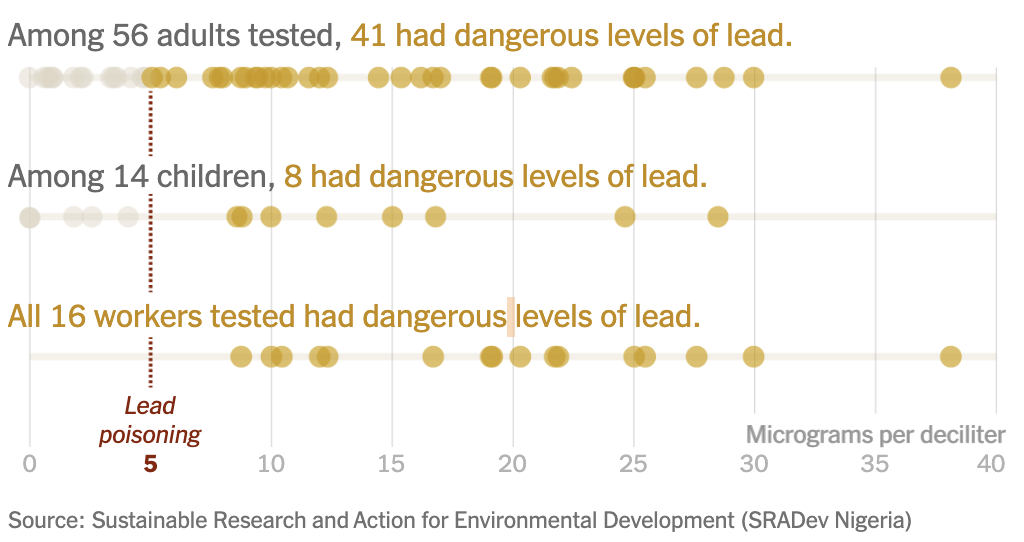
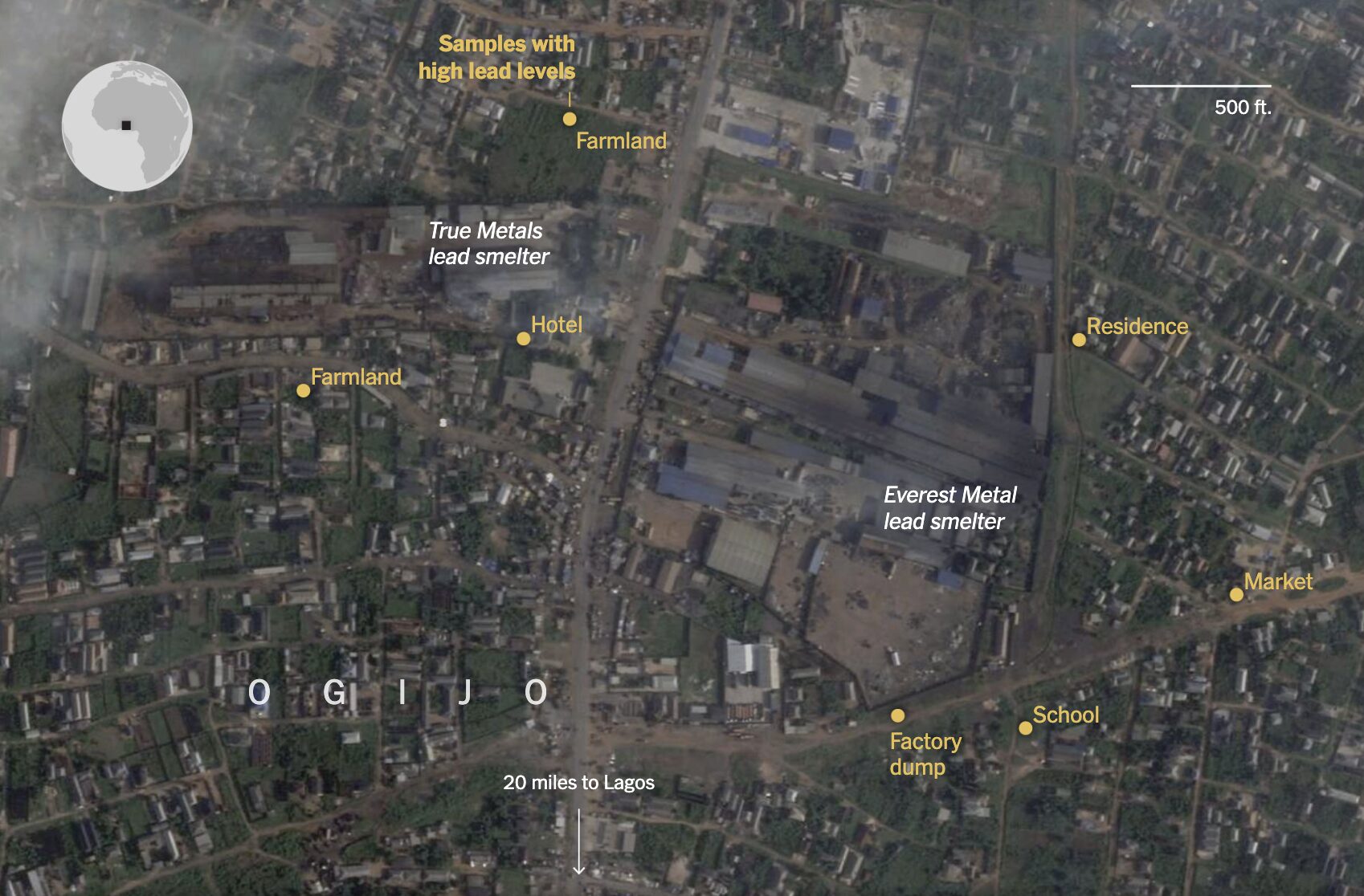
Dust and soil samples showed lead levels up to 186 times as high as what is generally recognized as hazardous. More than 20,000 people live within a mile of Ogijo’s factories. Experts say the test results indicate that many of them are probably being poisoned.
Lead poisoning worldwide is estimated to cause far more deaths each year than malaria and H.I.V./AIDS combined. It causes seizures, strokes, blindness and lifelong intellectual disabilities. The World Health Organization makes clear that no level of lead in the body is safe.
The poisoning of Ogijo is representative of a preventable public health disaster unfolding in communities across Africa. One factory’s lead soot falls onto tomato and pineapple farms near a village in Togo. Another factory has contaminated a soccer field in Dar es Salaam, Tanzania’s largest city. In Ghana, a recycler melts lead next door to a family’s chicken coop.
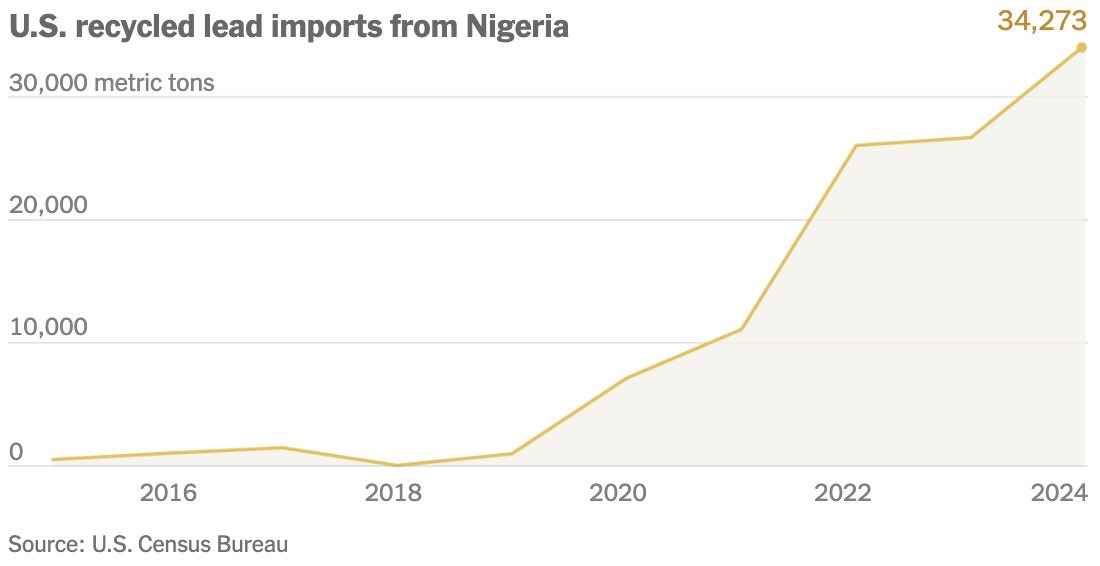
Factories in and around Ogijo recycle more lead than anywhere else in Africa. The United States imported enough lead from Nigeria alone last year to make millions of batteries. Manufacturers that use Nigerian lead make batteries for major carmakers and retailers such as Amazon, Lowe’s and Walmart.

The auto industry touts battery recycling as an environmental success story. Lead from old batteries, when recycled cleanly and safely, can be melted down and reused again and again with minimal pollution.
But companies have rejected proposals to use only lead that is certified as safely produced. Automakers have excluded lead from their environmental policies.
Battery makers rely on the assurances of trading companies that lead is recycled cleanly. These intermediaries rely on perfunctory audits that make recommendations, not demands.
The industry, in effect, built a global supply system in which everyone involved can say someone else is responsible for oversight.
Nigeria, the economic engine of West Africa, is among the fastest-growing sources of recycled lead for American companies.
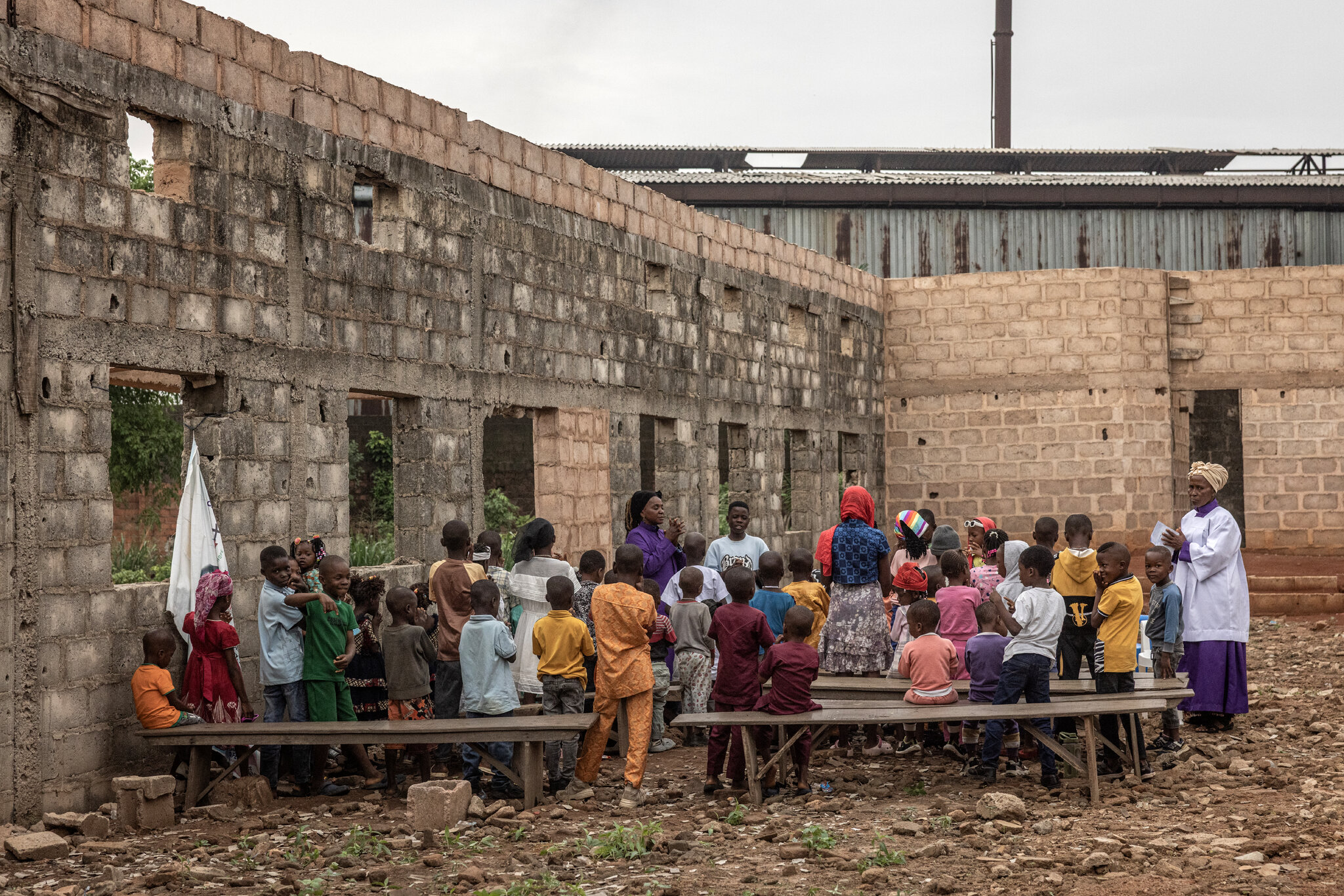
Ogijo and the communities nearby make up the heart of the industry, home to at least seven lead recyclers. Two factories are near boarding schools. Another faces a seminary. Others are surrounded by homes, hotels and restaurants.
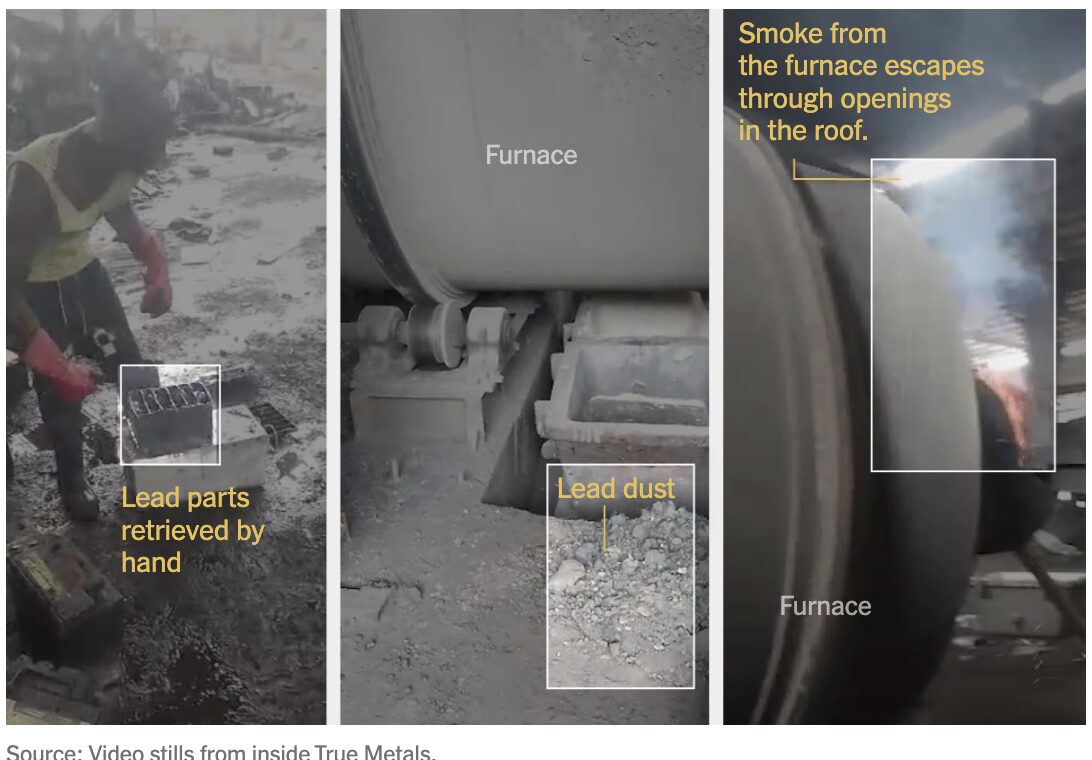
Among the largest and dirtiest lead recyclers in Ogijo is True Metals. It has supplied lead to factories that make batteries for Ford, General Motors, Tesla and other automakers, records show. True Metals did not respond to questions about its practices or the lead test results.

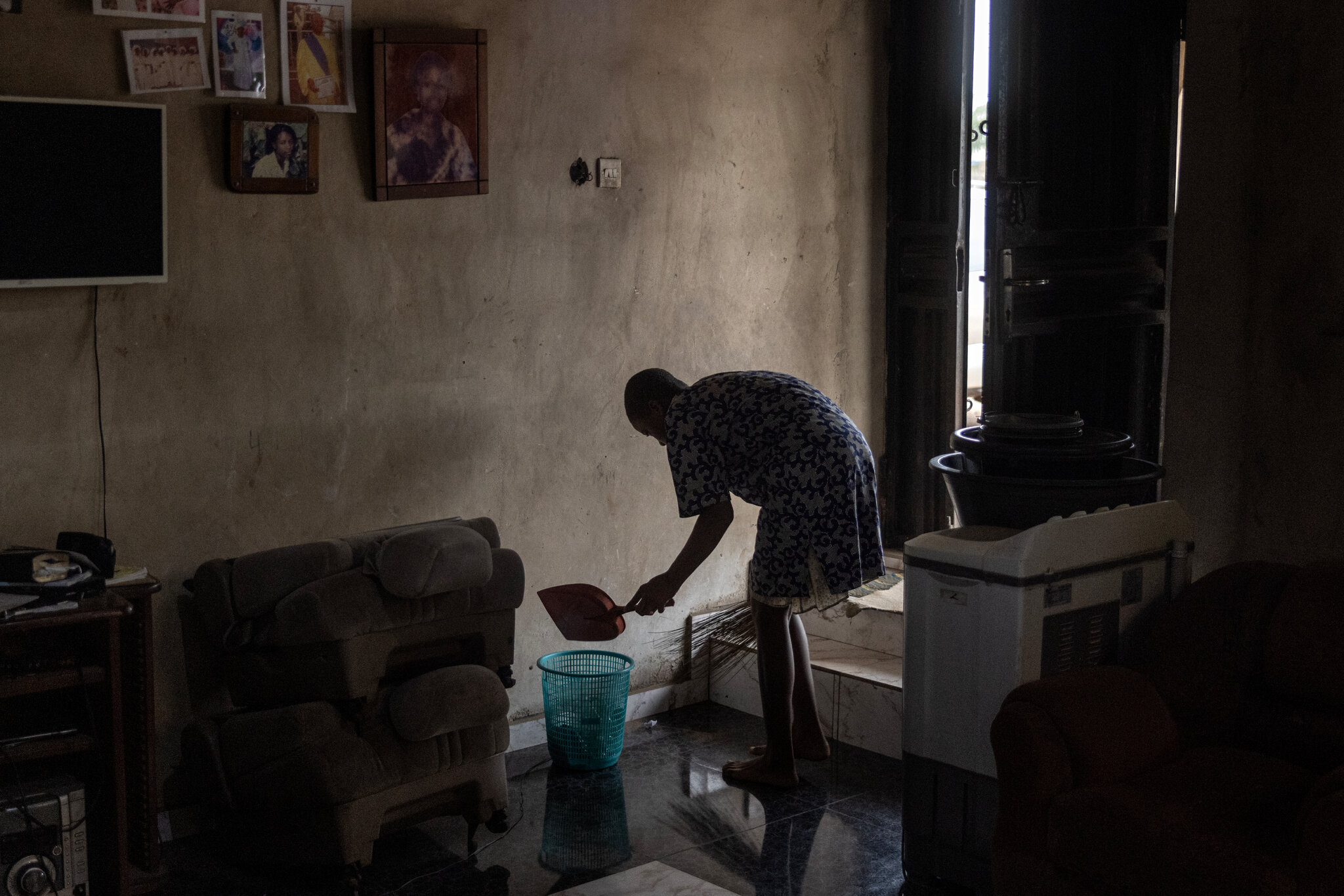
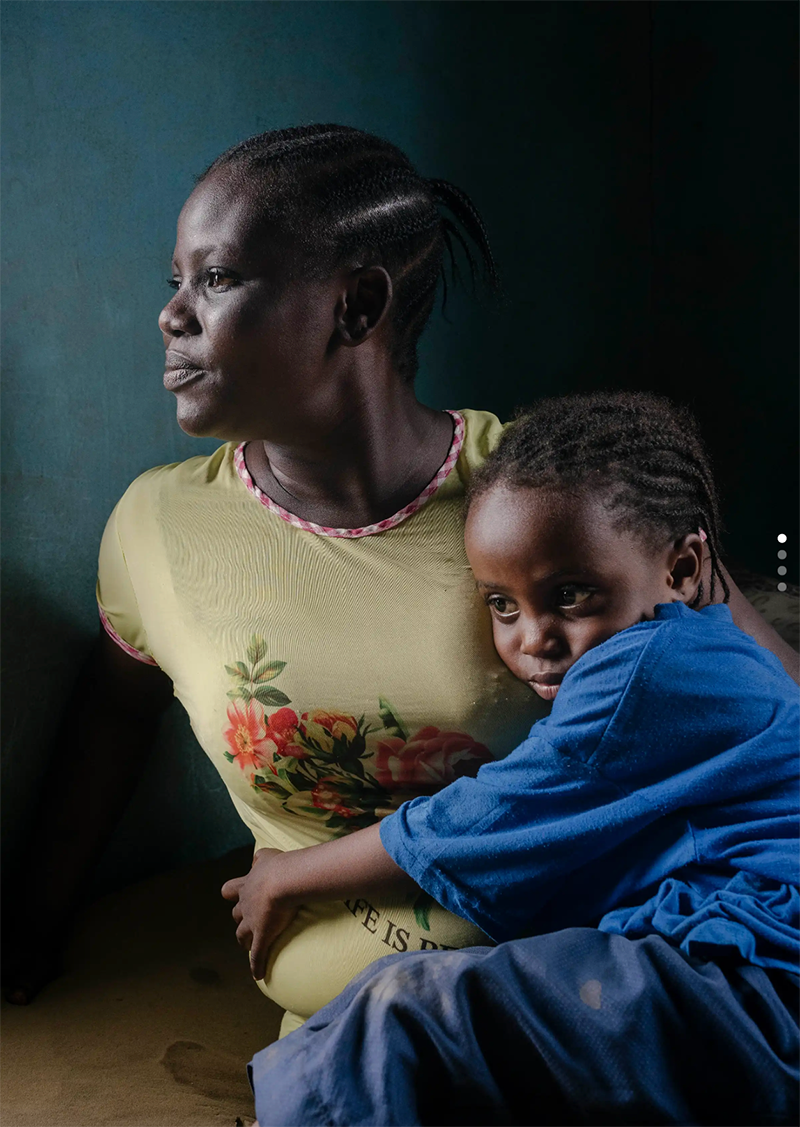
Four years ago, Oluwabukola Bakare was pregnant with her fifth child when she moved into a home in Ogijo within sight of a battery recycling factory.
The smoke seeped through the windows at night, making her family cough and leaving a black powder on their floor and food.
“In the morning, when we looked outside, the ground seemed to be covered in charcoal,” Ms. Bakare said.
Testing revealed that her 5-year-old son, Samuel, had a blood-lead level of 15 micrograms per deciliter, three times the level at which the World Health Organization recommends action. His 8-year-old brother, Israel, tested even higher.
Ms. Bakare, 44, has worked inside battery recycling factories for years, cleaning toilets and sinks. Her test showed she had a lead level of 31.1 micrograms per deciliter, which is associated with complications including miscarriages and preterm birth.
Now she wonders whether the smoke contributed to her son’s premature birth at seven months.
To understand the extent of Ogijo’s contamination, consider what happened more than a decade ago in Vernon, Calif., the site of one of the worst cases of lead pollution in modern American history. Soil testing around a recycling plant revealed high lead levels, including at a nearby preschool. Officials called the area an environmental disaster. The factory closed. The cleanup continues today.
Soil at the California preschool contained lead at 95 parts per million.
In Ogijo, soil at one school had more than 1,900 parts per million.
All this is avoidable. Lead batteries can indeed be recycled as cleanly as advertised. In Europe, experts say, some recycling factories are spotless. But that requires millions of dollars in technology.
Roger Miksad, the president of Battery Council International, an industry group, said that American manufacturers got 85 percent of their lead from recyclers in North America, where regulations are generally strict.
As for the growing amount from overseas, he said his group condemns unacceptable practices and advises lead recyclers on how to improve conditions.
“But at the end of the day,” Mr. Miksad said, “it’s up to regional and local governments and regulators to enforce the laws in their countries.”
Most major car companies did not address the Times and Examination findings about tainted lead from Nigeria. Volkswagen and BMW said they would look into it. Subaru said it did not use recycled lead from anywhere in Africa.
The test results, though, affirm years of research about the industry’s toll in Africa.
A 2010 study found widespread lead poisoning among workers at a recycler called Success Africa in Ghana. One employee’s lead level was so high that doctors were surprised he was alive. (Success Africa did not respond to requests for comment).
Yet the factory stayed open and in recent years has sold lead to a battery supplier for BMW, Volkswagen and Volvo. The Ghanaian Health Ministry recently found that 87 percent of children living near Success Africa had lead poisoning.
Nearly all of the lead recycled in Africa is used to make electrode plates for batteries. Because lead from various sources is combined during manufacturing, it is impossible for consumers to know the origin of the lead in their car batteries.
Nigerian officials are ill equipped to monitor any of this. The government is battling an armed insurgency and endemic corruption and struggles to provide basic health services, even for urgent concerns like malaria. Power is dispersed among federal, state and local authorities. Local monarchs hold largely ceremonial power.
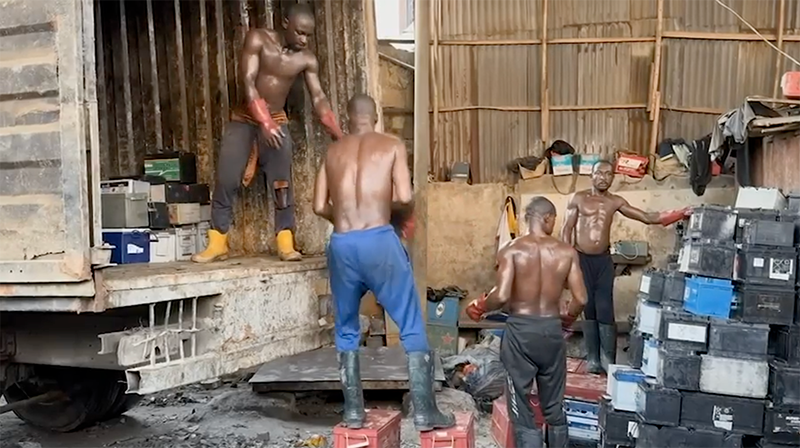
In Ogijo, recycling is a dirty, dangerous process. It begins with a dead battery. There are plenty; the United States sends tens of thousands of secondhand cars to Nigeria each year.
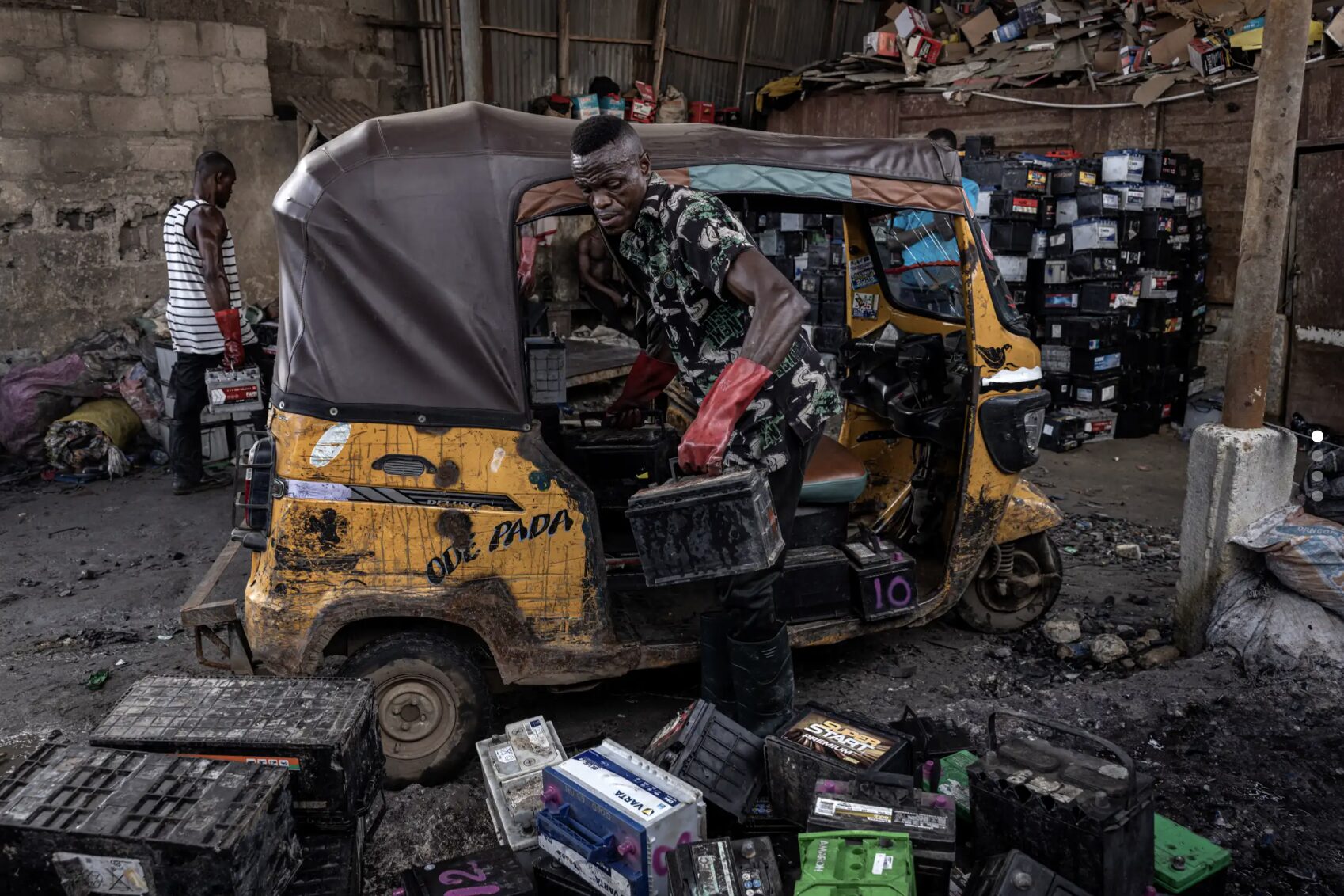
Then, workers known as breakers prepare the batteries to be recycled. They use machetes to hack into the plastic casings and drain the acid.
These breakers work for Goodluck Ejika, 43. “Today,” he said, “True Metals has called me five times.” Mr. Ejika handles hundreds of batteries every day.
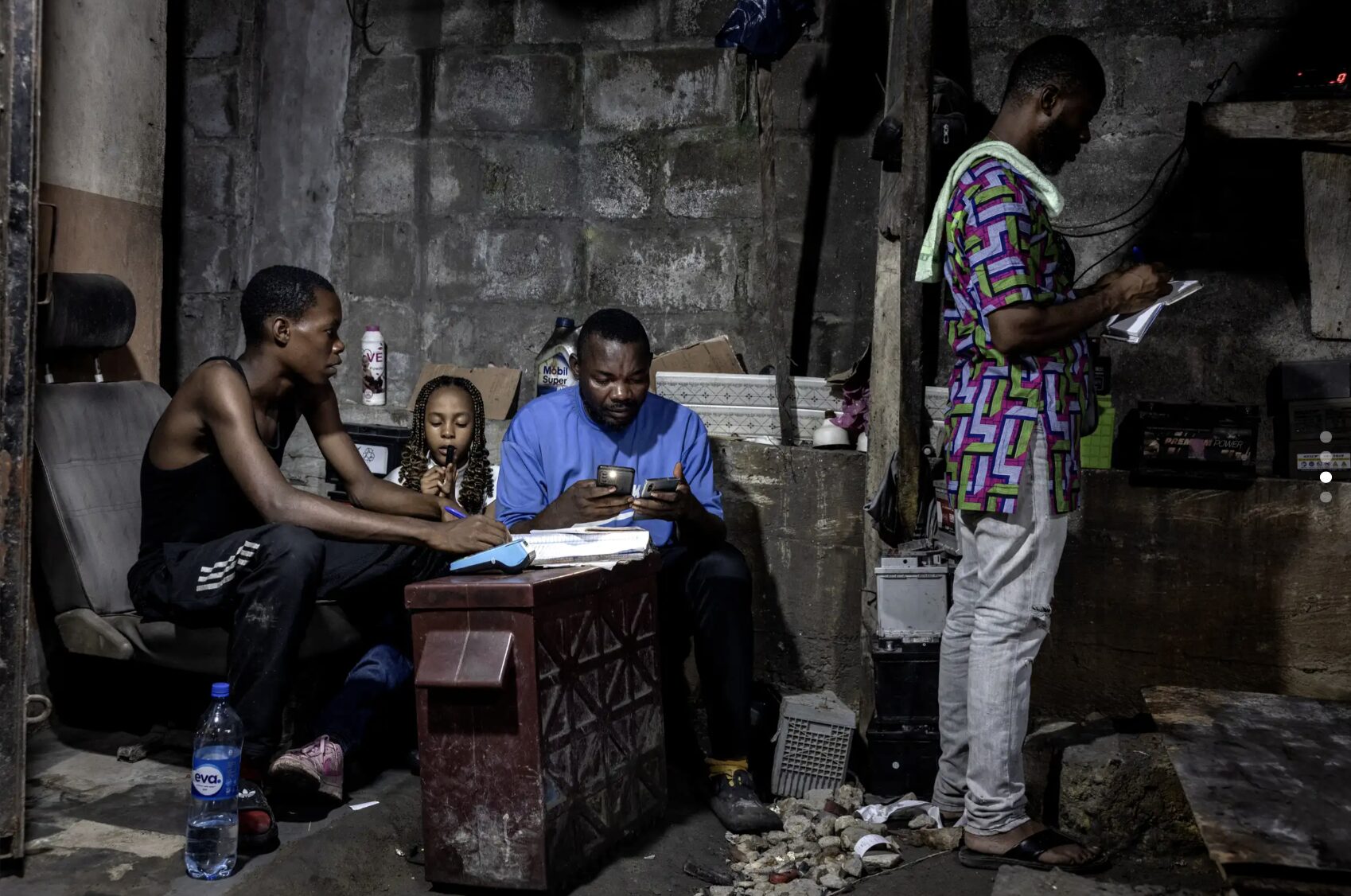
Each night, laborers work in a sort of bucket brigade to load batteries for delivery to the factories.
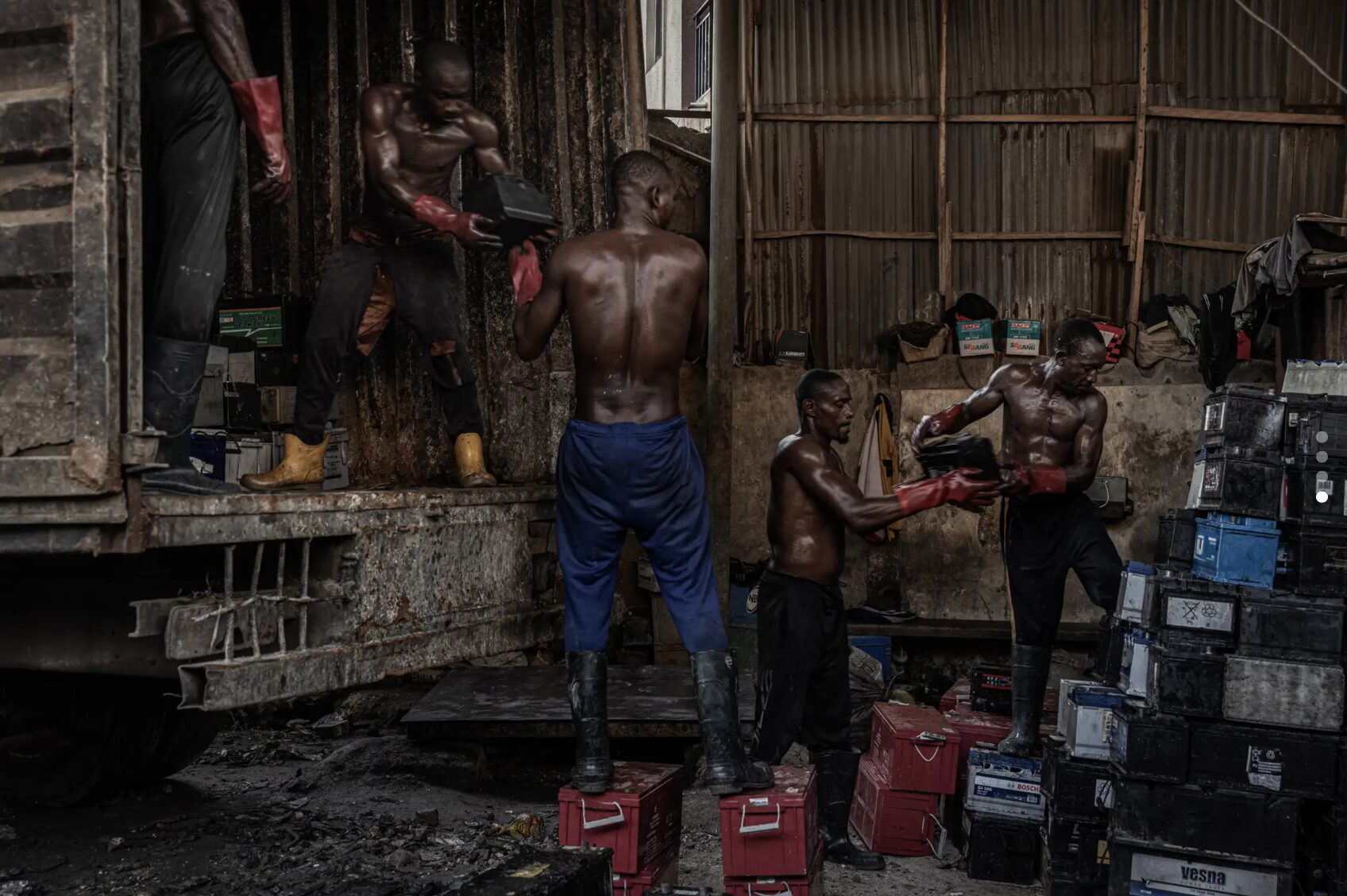
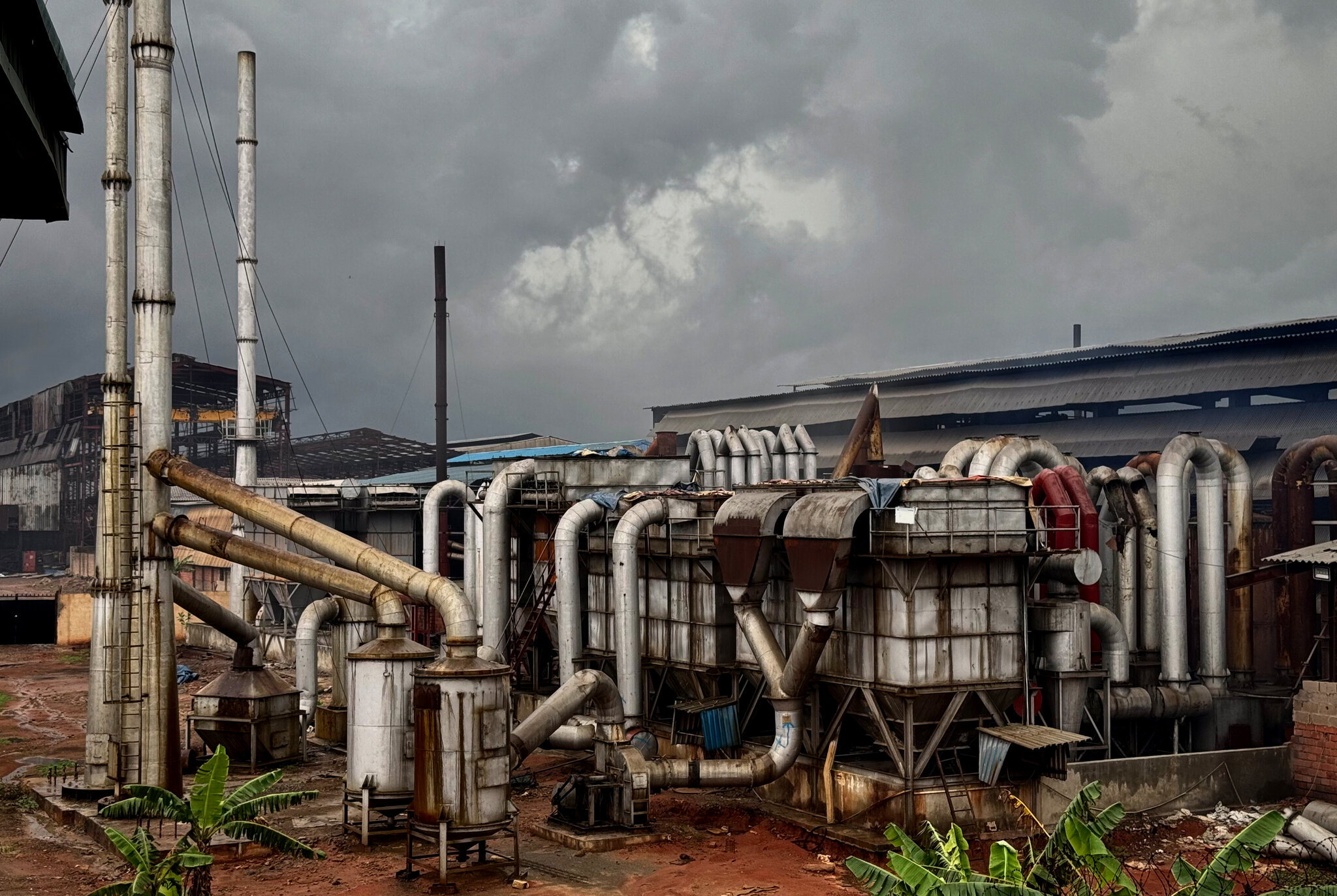
At these factories, known as smelters, lead from the batteries is melted and purified inside a furnace and then shaped into bars. This is the source of the poisonous smoke that drifts over Ogijo.
About a half-hour away from True Metals, the king of Ogijo, Kazeem Kashimawo Olaonipekun Gbadamosi, sat atop a carved wooden throne and leaned back into red velvet cushions. “I just want to close them all down,” the king said.
His subjects have complained for years about the factories, which sit among other metals plants. In surveys commissioned by The Times and The Examination, people reported common symptoms of lead poisoning: headaches, stomachaches, seizures, learning delays and other neurological complaints.

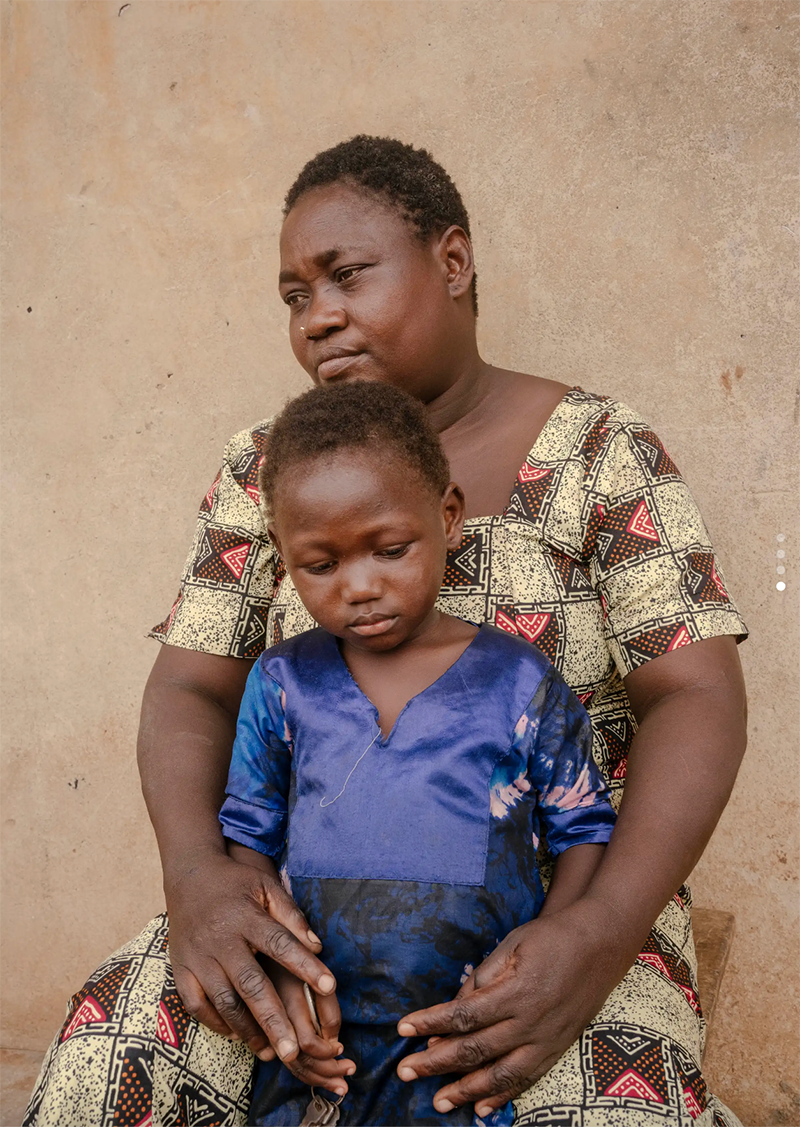
Residents recounted efforts to pressure the factories to improve — visits made, complaints lodged. As far back as 2018, the local newspaper Business Day wrote about lead pollution in Ogijo. Factory managers often apologized and promised improvements, residents said. Sometimes, the companies would string up electrical lines and add streetlights to make amends. But the pollution continued.
Despite the king’s exasperation, the real power resides with leaders in the capital, Abuja. “The government always says, ‘No, no, no, just give them time. Let’s get them to change,’” the king said.
Besides, his subjects wanted the factories clean, not closed. Ogijo is full of people who spend their days coaxing sustenance from meager opportunities. Children gather shreds of plastic that their mothers wash and sell to recyclers. Men squat in the dirt, using rocks to split open old wiring to extract copper.
Across Africa, governments have had little awareness of the harms of battery recycling, instead focusing on jobs and foreign investment, said Andreas Manhart, a senior researcher at Oeko-Institut, a German environmental organization. He has visited at least 20 African factories.
“We see investors coming in, setting up new, substandard operations,” he said. “And every time, this leaves a highly polluted site.”
As environmental regulations in the United States and Canada have driven dirty smelters out of business, buyers have searched the world for new suppliers. In recent years, companies in the United States have imported recycled lead from at least eight countries in Africa.
Because the supply chain is opaque and diffuse, car companies and battery makers are unlikely to know the precise origins of the lead they use. They rely on international trading companies to supply it.
One such company, Trafigura, has sent recycled lead to U.S. companies from True Metals and six other Nigerian smelters in the past four years, records show. Last year, Trafigura reported $243 billion in revenue by trading oil, gas and metals worldwide.
Until recently, Trafigura’s Nigerian suppliers included one factory, Green Recycling Industries, that tried to live up to its name.
International experts from nonprofit research groups and the metals industry visited Green Recycling last year as part of an effort to strengthen Nigeria’s weak inspection of battery recyclers. The country has laws to protect the environment but struggles to enforce them.
The experts marveled at Green Recycling’s antipollution technology and the machinery that safely broke apart batteries — the sort of equipment featured in promotional videos by American battery makers.
“The equipment and recycling processes are significantly different and of a remarkably higher standard than observed in any other plant in Nigeria,” the experts wrote.
But operating cleanly put Green Recycling at a disadvantage. It had to make up for its high machinery costs by offering less money for dead batteries. Outbid by competitors with crude operations, Green Recycling had nothing to recycle.
Ali Fawaz, the company’s general manager, said his competitors were essentially making money by harming locals. “If killing people is OK, why would I not kill more and more?” he said.
The company shut down this year.
“Healthwise, we made a correct decision, but businesswise, we made a very bad decision,” Mr. Fawaz said. “It’s a bad investment unless you’re dirty.”
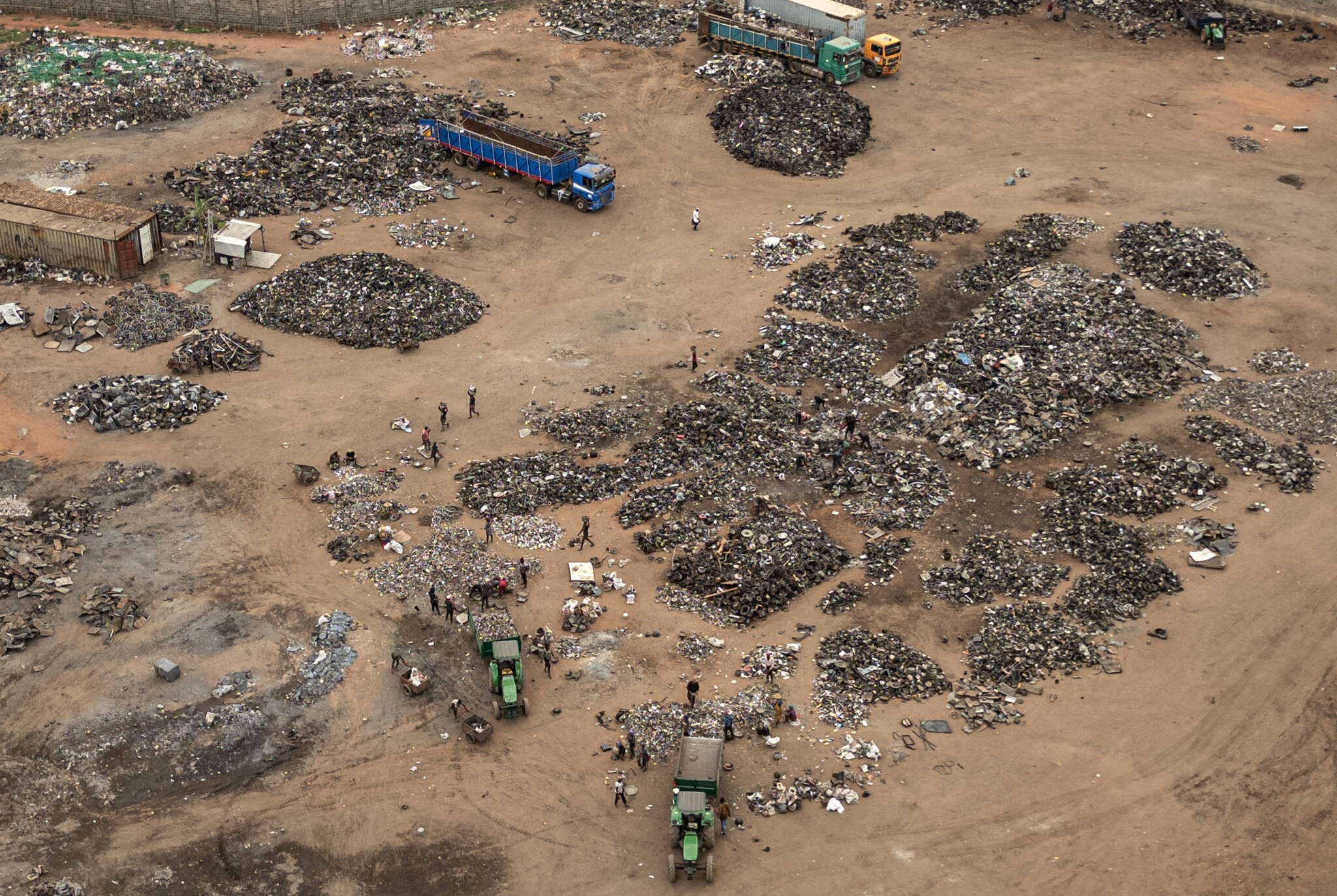
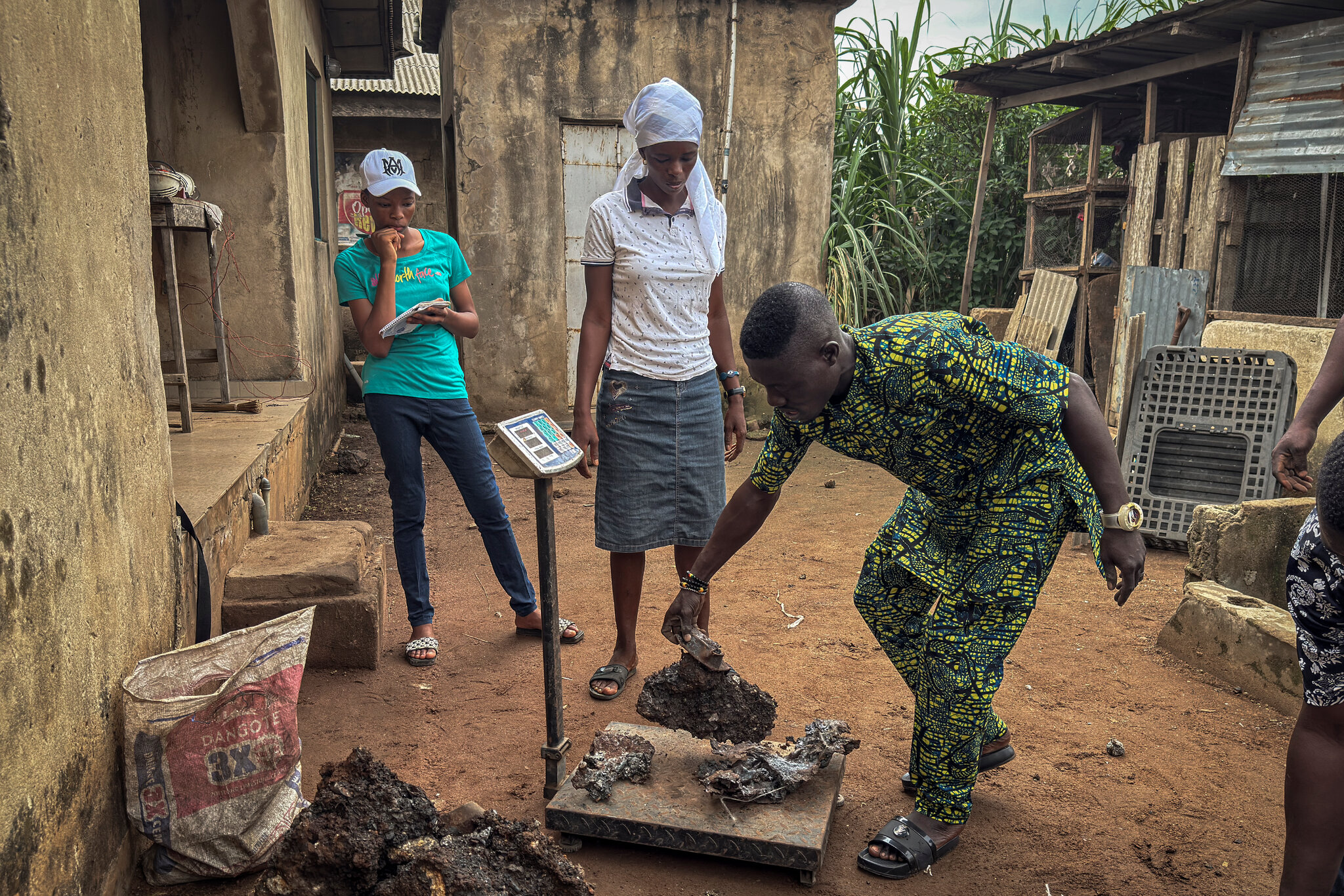
The same experts who praised the conditions at Green Recycling also visited its competitors. What they found most likely amounted to “severe human rights abuses,” they wrote. They concluded that seven plants in and around Ogijo were “in clear violation of international common practice.”
One factory was “shabby” and covered in lead dust. A few months later, records show, that plant shipped lead to the Port of Baltimore, the primary gateway for recycled lead from Africa to the United States.
At another factory, experts wrote that “lead emissions to the workplace and the nearby environment are considered as something normal.” One week later, that plant sent lead to Newark.
At a third factory, experts observed “thick smoke,” broken equipment and “woefully desolate” conditions. About a month later, that plant also shipped lead to the Port of Baltimore.
True Metals stood out as especially hazardous.
Workers there mishandled materials and unnecessarily subjected the surrounding area to toxic smoke, inspectors wrote. A thick layer of lead sludge and dust covered the floor. True Metals’ managers told inspectors that they conducted blood tests on their workers. Yet the company’s records showed only weight, pulse and blood pressure, according to the report.
Some of the hazards cited in the report would have been obvious to anyone inspecting the factories.
Trafigura hires contractors to audit suppliers to ensure they meet government and industry standards. But people involved in lead recycling said those audits had little effect.
One True Metals worker, who spoke on condition of anonymity to protect his job, said that visits were announced in advance and that most workers were sent home. Those remaining were given new overalls and goggles and coached on how to respond to questions, he said.
After such audits, consultants issue recommendations that include simple fixes, such as handing out safety gear, and expensive ones, like installing new equipment. The smelters typically do what’s affordable and skip the rest, according to interviews with a Lagos-based consultant who conducts audits, the owner of a Nigerian smelter and a former Trafigura trader who has visited plants throughout Africa. All spoke on condition of anonymity because they remain in the metals industry and feared reprisals.

In a written statement, a Trafigura spokesman, Neil Hume, said that the company followed all regulations and worked with the Nigerian government and outside experts to assess its lead suppliers. It is standard practice to notify plants before visits, he said.
“Our approach to responsible sourcing seeks to improve standards by providing clear expectations, training and capacity-building matched with monitoring,” Mr. Hume wrote. He said that Trafigura dropped suppliers that “consistently” failed to improve.
The company declined to discuss what it knew about the conditions at suppliers such as True Metals.
Exactly who buys lead from Trafigura and other trading companies is not public.
“It’s just a much murkier and unknown industry,” said Samuel Basi, a former lead trader with Trafigura. “It essentially becomes confidential once it comes into the U.S.”
A handful of companies dominate auto battery manufacturing in the United States. The largest manufacturer, Clarios, says that it does not buy lead from West Africa. The second-largest, East Penn Manufacturing, has.
East Penn, a family-owned company, says its recycling roots go back 80 years. It operates the largest battery plant in the world, in tiny Lyon Station, Pa.
The company has called itself “the most progressive manufacturer in environmental protection in the entire industry.” On the company’s website, it says, “Green is good.”
In an interview, East Penn executives said that lead shortages forced it to rely on brokers. “Under 5 percent” came from Nigeria, said Chris Pruitt, East Penn’s executive chairman of the board.
Mr. Pruitt said that the company had paid little attention to the provenance of its lead until The Times and The Examination asked questions. East Penn relied on its brokers’ assurances that everything was fine.
“Could that be me being too trusting?” Mr. Pruitt said. “I’ll take that shot.”
East Penn stopped buying Nigerian lead and began tightening its supplier code of conduct after receiving the questions, Mr. Pruitt said. Lead purchases are now subjected to extra scrutiny and executives receive monthly reports about overseas purchases, he added.
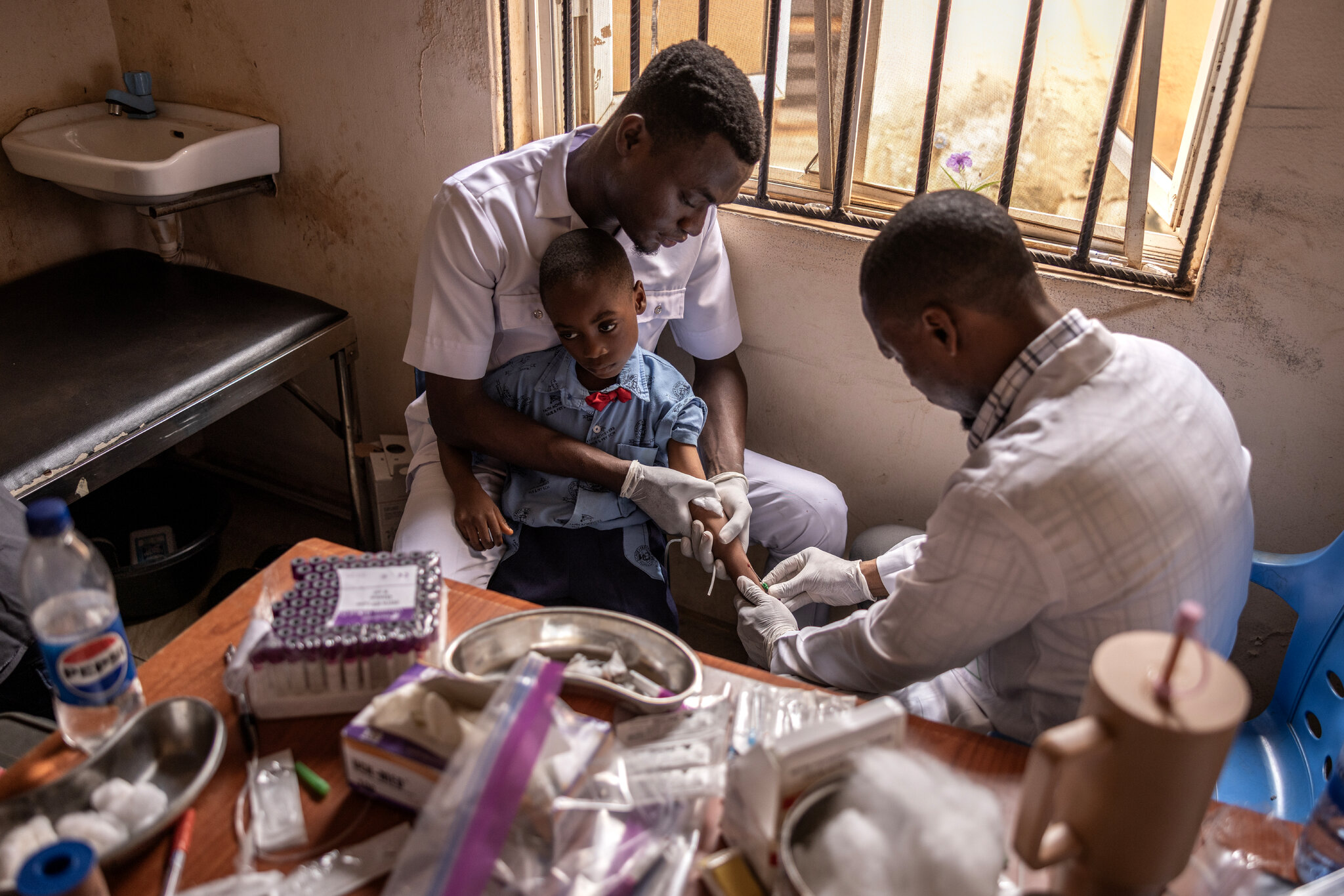
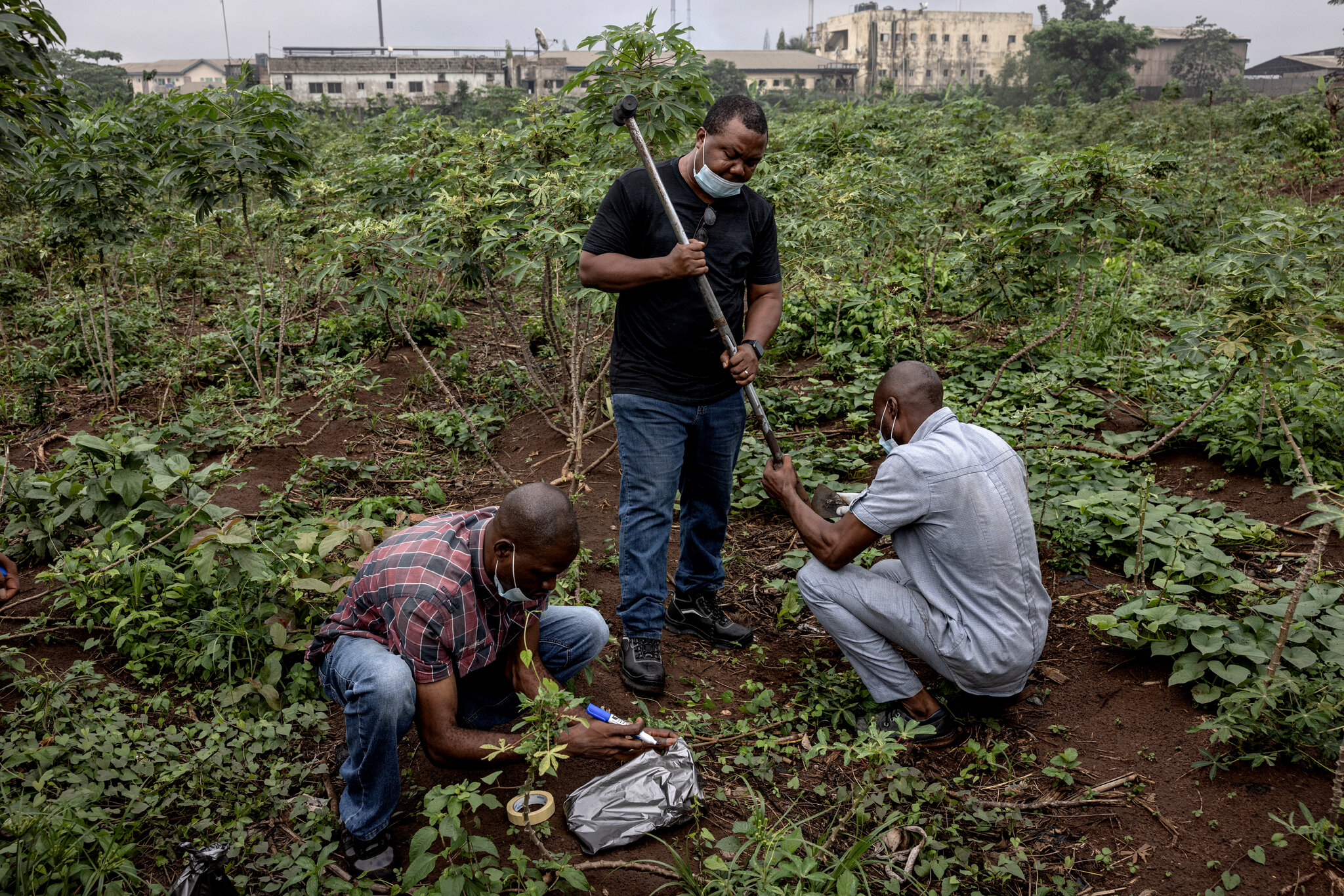
IN SEPTEMBER, researchers who conducted the blood and soil testing for The Times and The Examination concluded in a report that most people with high blood-lead levels had breathed in particles emitted by the factories. They wrote that the government needed to move quickly to address the poisoning and begin a comprehensive cleanup.
That month, Nigerian officials closed five smelters, including True Metals.
“Tests have revealed the presence of lead in residents, resulting in illnesses and deaths,” Innocent Barikor, director general of Nigeria’s environmental protection agency, said in a written statement.
The authorities said that those factories had broken the law by failing to operate required pollution control equipment, to conduct blood tests on staff and to prepare environmental impact assessments. The government also cited the factories for breaking batteries apart by hand rather than with machines.
But days later, the factories were running again.
Though Mr. Barikor had threatened to revoke the factories’ licenses, he didn’t. In an interview, he said that he had met with leaders of the factories. He said that they had agreed to properly dispose of waste, upgrade to cleaner technology and, within six months, install automated battery-breaking machines. “Our meeting was very, very fruitful,” he said.
The waste-disposal promise has already been delayed as state authorities look for a dump site. A copy of the agreement, signed by True Metals and reviewed by The Times and The Examination, says nothing about automated breaking systems. The company agreed to a timeline of two to three years to “transition to cleaner recycling technologies.”
The Times and The Examination sought comments from all the recyclers. Two responded. BPL Nigeria said it was making health, safety and environmental improvements. “The evolution of industry practices requires time,” the company said in a statement.
Anand Singh, a manager at another factory, African Nonferrous Industries, denied breaking any laws but said that the company was making improvements nevertheless. “Compared to others in Nigeria, my company is the best,” he said.
In October, researchers gathered residents to disclose their test results. Anxious workers and parents lined up to speak to nurses and to collect multivitamins and calcium tablets, which can limit lead absorption.
But those treatments are just part of what experts recommend in lead poisoning cases. Generally speaking, the first thing doctors advise is to reduce exposure. Cover or seal chipped lead paint. Replace lead water pipes. Put clean topsoil over contaminated dirt.
There is no playbook for reducing exposure when people’s homes are being sprinkled with lead dust from the sky.

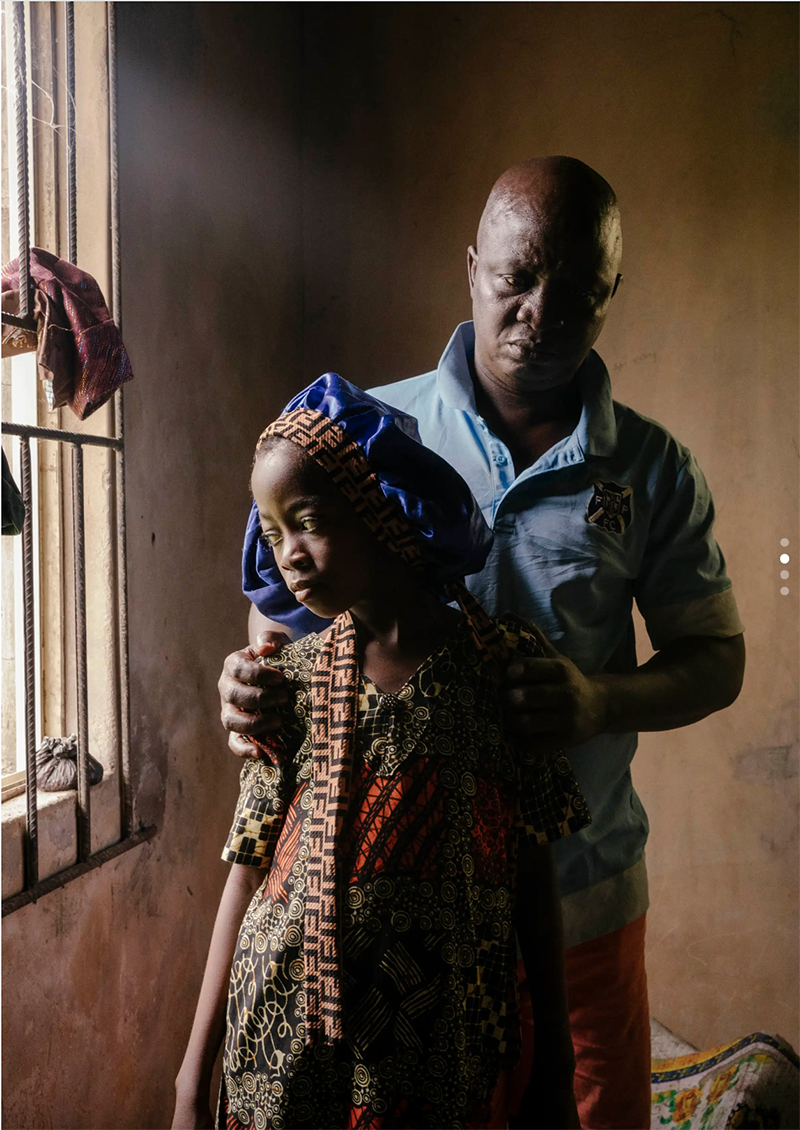
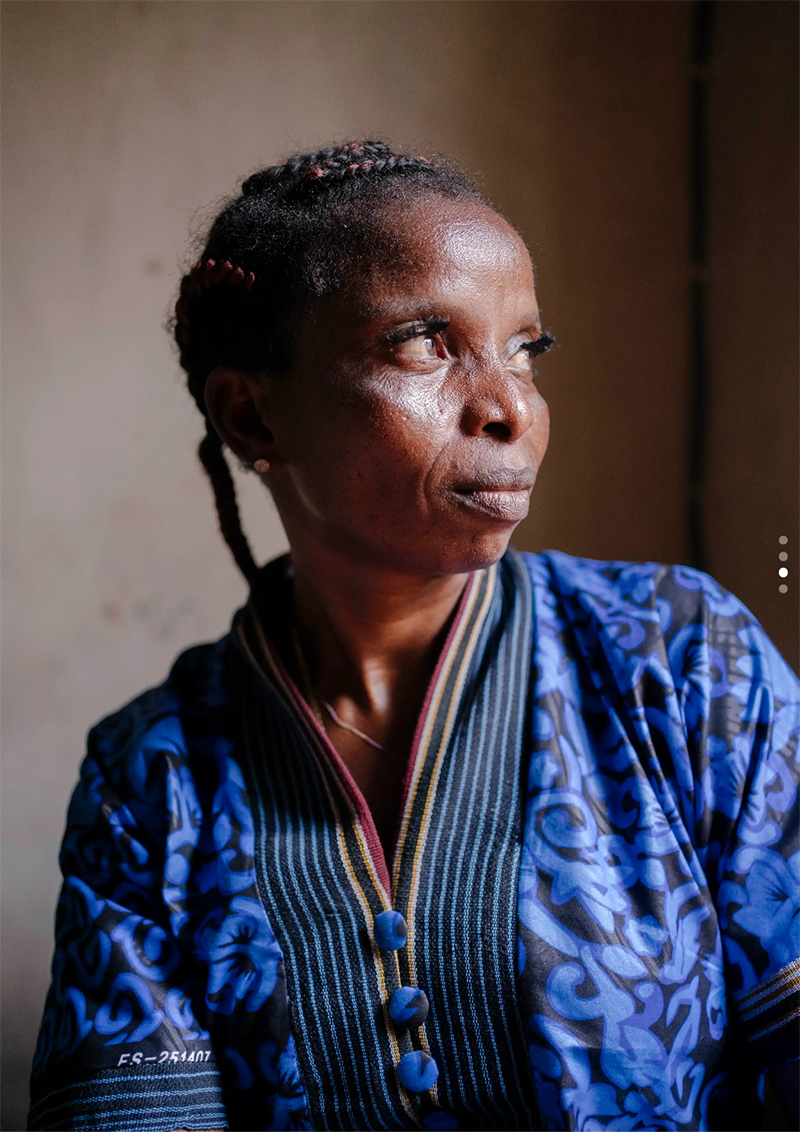
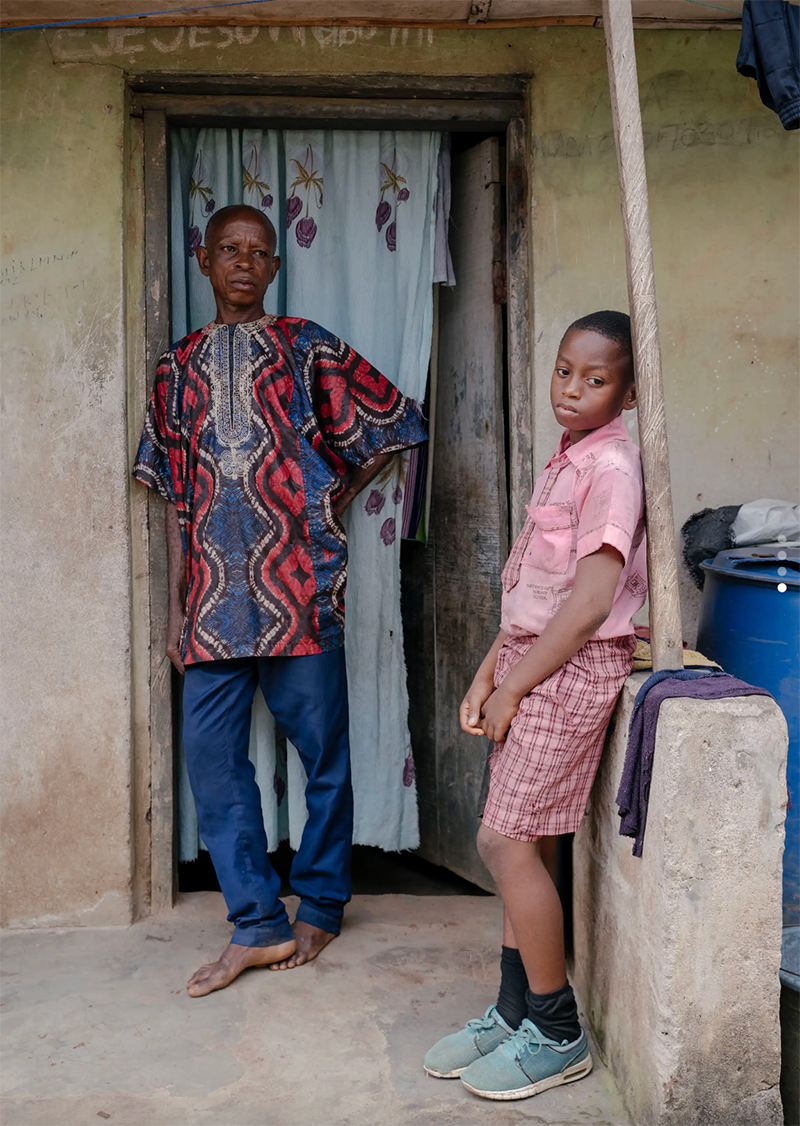
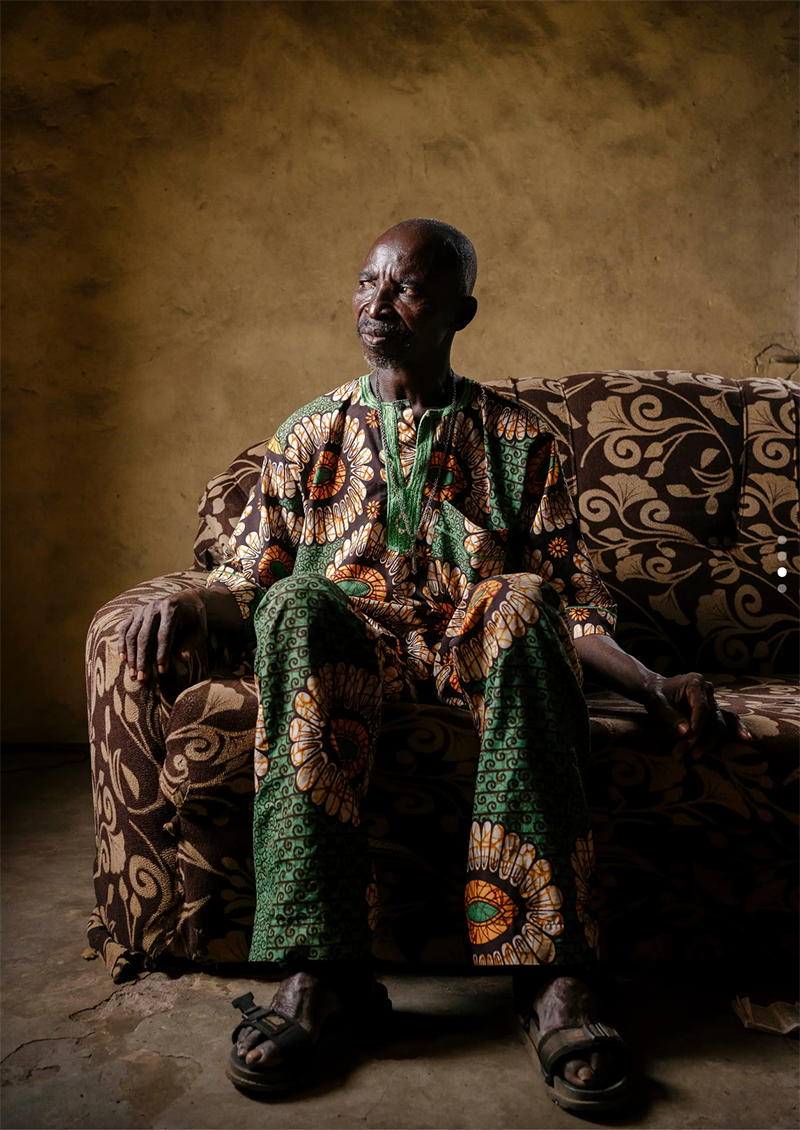
Thomas Ede said he didn’t have the money to move. “I don’t know the way out,” he said. “There’s nothing from the government. They’re saying, ‘Just go away.’”
The morning after he received the test results, Mr. Ede stepped outside the room that he shares with his three children, all of them sleeping together on a crumbling mattress.
He looked past his clothesline toward True Metals. At the front gates stood two shipping containers, ready for their loads.
This article was reported in collaboration with The Examination, a nonprofit newsroom that investigates global health. Fernanda Aguirre, Romina Colman and Mago Torres contributed research and data analysis. The videos of the lead recycling plants in Nigeria at the beginning of this article are by Finbarr O’Reilly, and the portraits are by Carmen Abd Ali.
Doom: The Politics of Catastrophe by Niall Ferguson review
(Evening Standard) – From plagues and volcanic eruptions to the current Covid pandemic, mankind has always been faced with catastrophes.
Thought Leader: Niall Ferguson
Time to end secret data laboratories—starting with the CDC
The American people are waking up to the fact that too many public health leaders have not always been straight with them. Despite housing treasure…
Thought Leader: Marty Makary
Scott Gottlieb: How well can AI chatbots mimic doctors in a treatment setting?
This is an Op-ed by WWSG exclusive thought leader, Dr. Scott Gottlieb. Many consumers and medical providers are turning to chatbots, powered by large language…
Thought Leader: Scott Gottlieb
Peter Goodman: Inside Arizona’s TSMC Community
Thought Leader: Peter Goodman
Peter Goodman on the Cost of “Clean” Tech
Thought Leader: Peter Goodman