Mike Pence on Leadership and the Future of the Republican Party
Former US Vice President Mike Pence looks back on the events of January 6 2021, his final days in office with President Trump and his…
Thought Leader: Mike Pence

This piece is by WWSG exclusive thought leader, Niall Ferguson.
“What the hell just happened?” is a question many people are asking as they try to make sense of global financial markets in turmoil. It is the right question. With the emphasis on “hell.”
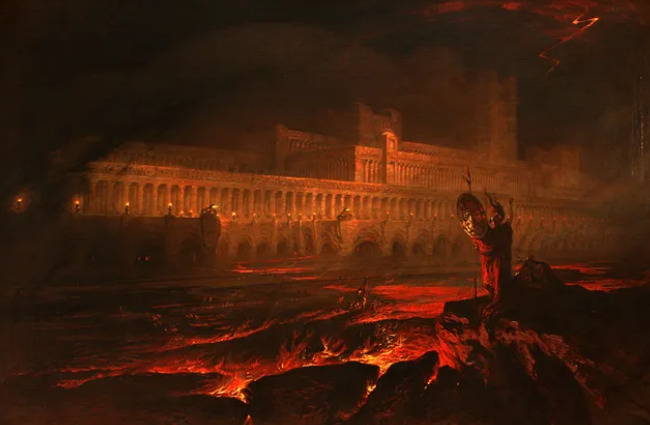
As I watched the global stock markets tumble, I thought of a trip I took earlier this year to the Louvre with my younger sons. Bored by the throng of people inanely taking identical bad photographs of the Mona Lisa, we stumbled upon a largely forgotten masterpiece, the representation of Milton’s Pandemonium by the Victorian artist John Martin.
“Take a good look, lads,” I said. “That’s where we’re headed.”
There is a time-honored convention among financial journalists to identify a cause, or at least a catalyst, for any financial crash. As Asian, then European, then American markets tumbled on Monday—the worst meltdown in Japan since 1987—the prime suspect was last Friday’s somewhat underwhelming U.S. jobs report.
“Concerns about a slowing U.S. economy are front and center after job growth slowed sharply in July,” explained The Wall Street Journal. “Investors are worried that the Federal Reserve has moved too slowly and will need to play catch up in cutting rates.” The Financial Times told pretty much the same story. “Markets, which have been rising for most of this year, fell amid fears the Federal Reserve has been too slow to respond to signs the U.S. economy was weakening.”
But Friday’s jobs report wasn’t that bad. The low number of jobs added by the U.S. economy in July (114,000) might be the result of summertime distortions. April’s number was even lower—108,000—though that became clear only after the statisticians revised it. Still, no one batted an eyelid. And so on I might go, explaining to you that things really aren’t that bad in the U.S. labor market and that consumers haven’t yet thrown in the towel in a way that might signal a coming recession.
But a reasonable layman wants to interrupt all this and scream: “Why would even a much worse jobs number in the U.S. cause the Japanese stock market to fall by 12.2 percent in a single day?”—its biggest one-day move in 37 years. Why would a U.S. jobs report cause Japanese bank stocks to fall even further? Why would it cause the South Korean and Taiwanese markets to drop more than 8 percent? And the VIX index of implied volatility to register a massive jump?
Mike Pence on Leadership and the Future of the Republican Party
Former US Vice President Mike Pence looks back on the events of January 6 2021, his final days in office with President Trump and his…
Thought Leader: Mike Pence
Marc Short on U.S. Investment in Critical Minerals
Why do critical minerals matter now? Marc Short explains how U.S. investment in critical minerals fits into a broader strategy around economic security, manufacturing, and…
Thought Leader: Marc Short
Marc Short on AI Policy and the Government’s Role in Chip Technology Investment
On CNBC, Marc Short breaks down the role of AI policy and how government investment is shaping the future of chip technology. A former Chief…
Thought Leader: Marc Short
Niall Ferguson: Trump’s World Order Live From Davos
Thought Leader: Niall Ferguson