Doom: The Politics of Catastrophe by Niall Ferguson review
(Evening Standard) – From plagues and volcanic eruptions to the current Covid pandemic, mankind has always been faced with catastrophes.
Thought Leader: Niall Ferguson

This essay is based on a Hoover History Lab working paper, co-authored with Joshua Stinson, William Norris, and Daniel Egel.
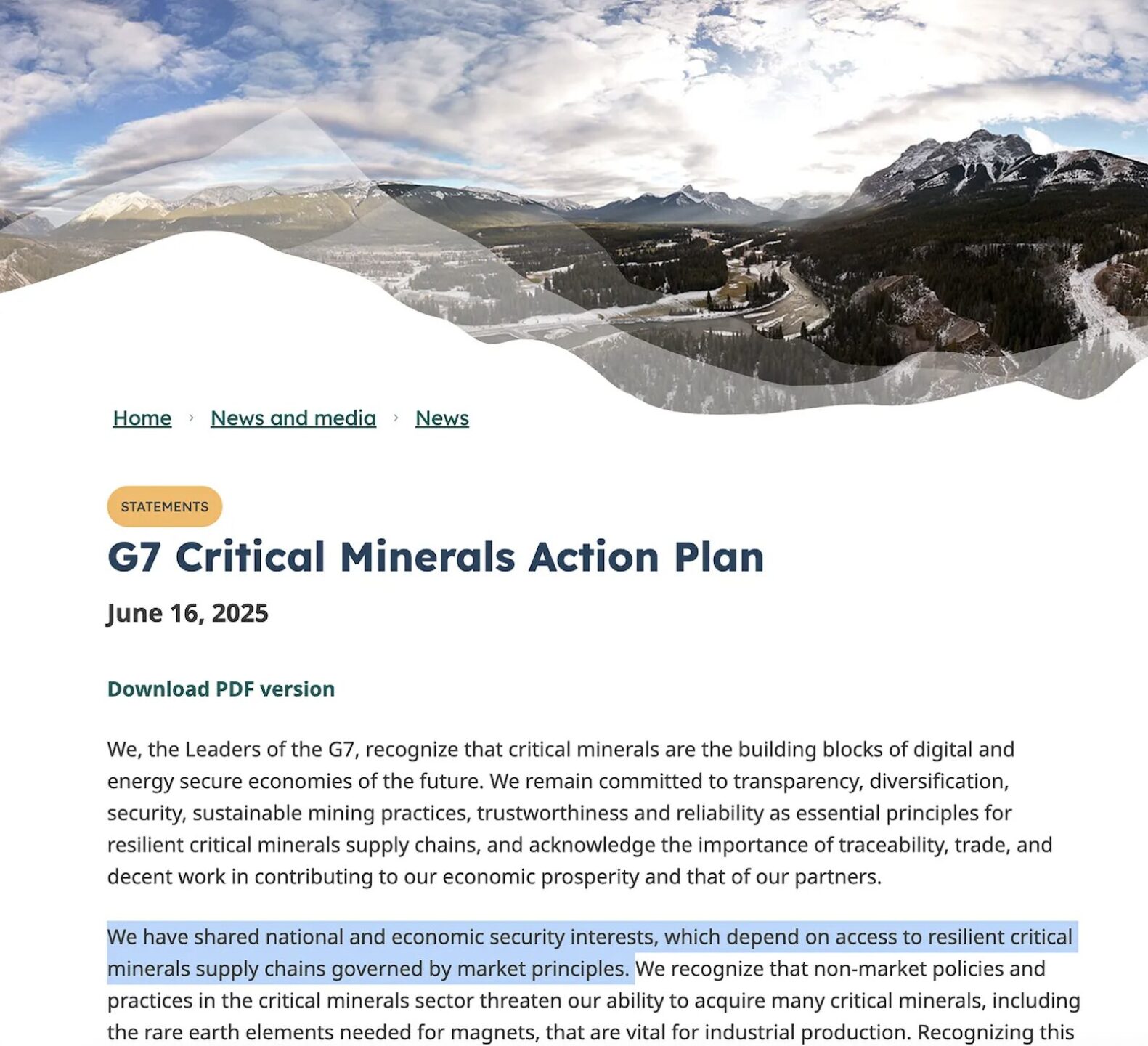
In April, Beijing quietly reminded the world how much leverage it has over the allied industrial base.
After Washington rolled out a new round of tariffs on PRC EVs and batteries, PRC regulators responded by tightening export controls on several rare earths and processed minerals. Within weeks, procurement managers across North America, Europe, and East Asia were scrambling. A handful of factories in sectors that have nothing to do with EVs—electronics, specialized alloys, even defense components—started talking about scaling back shifts or retooling.
Beijing never had to announce a “sanctions package.” It just had to make life difficult for a few under-the-radar firms that depend on PRC refiners and processors, and let the fear of escalation do the rest.
This is the new face of economic coercion: not a dramatic embargo, but targeted interventions in thin, opaque markets where one country—China—controls an overwhelming share of processing capacity. In some critical minerals, that share is over 90 percent. Even where mining is geographically diverse, the chokepoint is in refining and separation, and that chokepoint often sits on the Chinese mainland.
If deterrence is about convincing an adversary that war would be too costly, this is a glaring vulnerability. In a crisis over Taiwan, we should assume Beijing would use every lever of coercion short of war before crossing the nuclear threshold. Right now, that includes the ability to kneecap pieces of the U.S. and allied industrial base at will.
The question is not whether we can “de-risk” from China entirely. It’s whether we can design institutions that make this kind of coercion less effective—so that a bureaucratic decision in Beijing can’t shut down our factories next quarter.
That’s where the idea of a multilateral commercial stockpile for critical minerals comes in.
Washington has not been asleep. Over the last few years, the U.S. has started to admit—in legislation rather than white papers—that market forces alone will not deliver adequate resilience in critical minerals.
The One Big Beautiful Bill commits on the order of ten billion dollars to shore up supply chains for critical minerals and related inputs. The Pentagon is already experimenting with new tools: taking an equity stake in MP Materials, providing guaranteed offtake and price floors to help it scale up rare-earth magnet production in the United States. The basic logic is sound. If Beijing can crash prices whenever a non-PRC project threatens its market share, you need some form of public backstop to keep those projects bankable.
But there are two problems with this ad hoc approach.
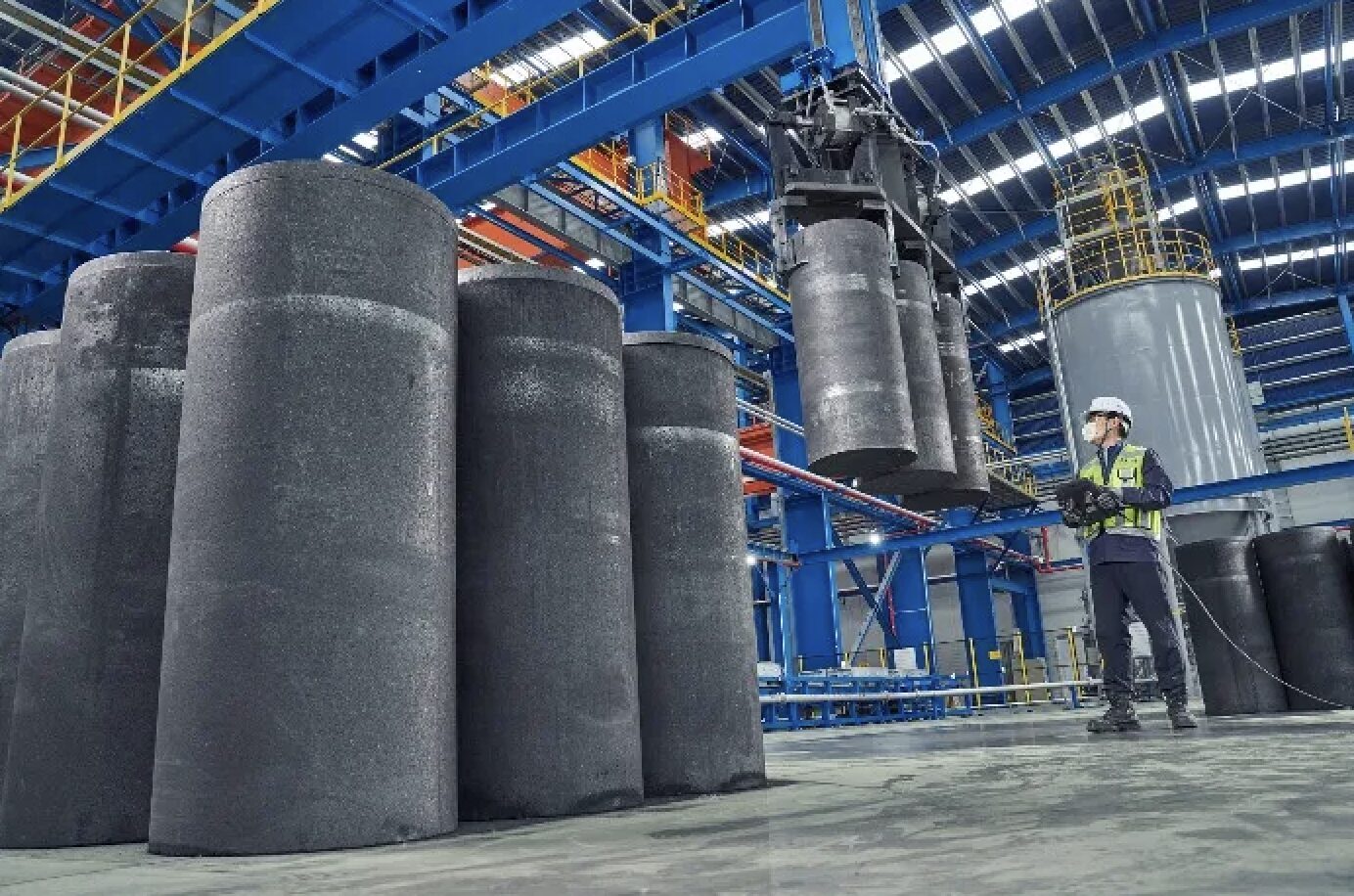
First, it doesn’t scale. The U.S. economy and its allies consume on the order of several billion dollars a year in just the most strategically important minerals—gallium, germanium, graphite, magnesium, tungsten, and so on. You can’t negotiate a bespoke MP-style deal for every mineral and every firm. The transaction costs alone would be enormous, and you’d quickly run up against political resistance to what looks like permanent corporate welfare.
Second, and more fundamentally, it doesn’t fix the underlying structure of the market. For many critical minerals there isn’t a liquid, transparent spot market at all—just a patchwork of bilateral contracts and long-term offtake deals. That opacity makes it easier for Beijing to disguise coercion as “regulatory action” or “ordinary market volatility,” and harder for investors to price the risk of non-PRC projects.
We are trying to address a systemic problem—a concentrated, politically captured supply chain—with piecemeal tools. We need something that operates at the level of the system.
The idea I’ve been working on is a Multilateral Commercial Stockpile (MCS) for critical minerals: a U.S.-led, sovereign-backed but privately operated mechanism to stabilize markets and blunt Beijing’s leverage.
The concept is simple.
The stockpile would accumulate roughly twelve months of normal peacetime demand for a short list of high-priority minerals across participating countries. Purchases would happen when prices are stable or depressed—often precisely when PRC firms are dumping product to drive non-PRC competitors out of business.
When China imposes export controls, orchestrates a price spike, or otherwise weaponizes its market power, the stockpile would sell into the market. The goal is not to suppress prices forever, but to buy time—to smooth shocks, avoid panic, and give alternative suppliers a chance to come online.
By guaranteeing that there is always a buyer and seller of last resort, the stockpile underwrites the creation of deeper spot and futures markets for minerals that currently trade in thin, clubby channels. It turns a political weapon into a tradable asset class that can be hedged.
Crucially, this is not about turning Washington, Brussels, or Tokyo into central planners for the metals trade. The MCS would not fix prices or dictate who mines what where. It is a piece of market infrastructure—more like a central bank backstop for a fragile financial market than a Soviet five-year plan.
You could imagine starting with a core list of perhaps twenty minerals where three conditions are all present:
The aim is to change the incentive structure for private investment. If you’re a mining or processing firm in Australia or Canada, or a Western-financed project in Africa or Latin America, you should be able to look at the existence of the MCS and say: “Even if Beijing tries to crash the price, there is a floor under this market. The allied governments literally have skin in the game.”
In theory, the United States could try to solve the problem by going it alone: subsidize enough domestic mining, refining, and recycling to make itself self-sufficient in every critical mineral that matters.
In practice, that would be slow, expensive, and politically fragile. It would also leave our allies exposed. If Japan or the EU remain heavily dependent on PRC processing and we do not, Beijing will simply redirect its coercive pressure toward them. In a crisis, the weakest link defines the strength of the chain.
A better strategy is to lean into allied comparative advantage.
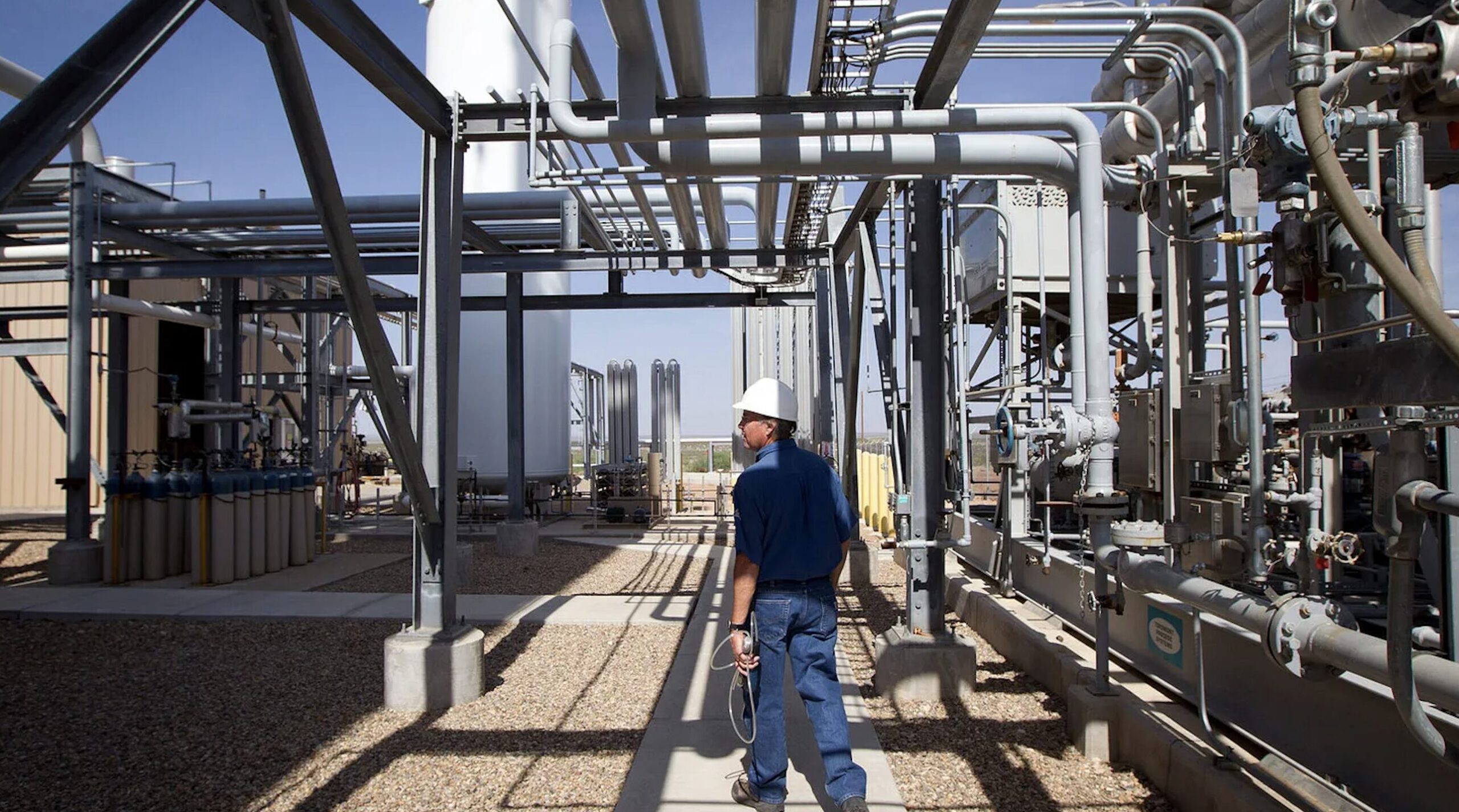
Japan already runs a commercial stockpile of oil and certain minerals through JOGMEC and has decades of experience using it to stabilize markets. The EU has finally woken up to its raw-materials vulnerabilities and is experimenting with joint purchasing schemes. Canada, Australia, and several Latin American and African producer states have both geology and political will to diversify away from China—but they need durable demand signals and financing structures to make non-PRC projects real.
A U.S.-led MCS offers a way to knit these disparate efforts together.
For the United States, there is also a simple economic logic. It is cheaper and more efficient to tap an existing Australian mine or a Japanese refining facility, backed by a shared commercial stockpile, than to try to reproduce every link of every value chain on U.S. soil.
Skeptics will point out that commodity stockpiles have a checkered history. They are not wrong.
The U.S. National Defense Stockpile, created after World War II, gradually drifted from its original purpose into a grab bag of programs that propped up inefficient domestic producers. International commodity agreements for tin and rubber tried to peg prices within fixed bands, but broke down under the strain of market shifts and free-riding. The Federal Helium Reserve famously over-bought, then was forced by Congress to dump its holdings at fire-sale prices, damaging the very private industry it was meant to support.
These are real failure modes. But they are also design problems we can avoid.
Three principles matter.
First, float—don’t fix.
The MCS should not peg prices. It should intervene only when there is credible evidence of coercive behavior or extreme volatility: export controls aimed at a specific partner, price moves that cannot be explained by fundamentals, or documented shortages among key industrial users. That implies building a transparent technical framework—using moving averages, inventories, and independent analysis—to trigger action, rather than leaving it entirely to politics.
Second, capitalise for the full cycle.
A stockpile that is forced to sell at the bottom of the market because it runs out of cash is worse than useless. The MCS needs to be capitalized—through a mix of government seed money and private finance—to ride out full boom-bust cycles in these commodities. Think of it more like a conservative, over-collateralized hedge fund than a discretionary spending program.
Third, separate strategy from operations.
To keep politics from turning the stockpile into a slush fund, governance has to be hybrid. A Sovereign Board of member governments sets the priority minerals list, target stockpile levels, and broad rules of engagement. A Commercial Operations Board, with representation from private operators and technocratic agencies, executes purchases, storage, and releases under those rules. Governments decide what to do; firms decide how to do it.
If you do these things right, a commercial stockpile stops looking like a throwback to the 1970s and starts looking like a modern risk-management tool targeted at a very specific problem: one actor’s ability to weaponize its dominance in a set of thin, strategic commodity markets.
Concretely, you can imagine the Multilateral Commercial Stockpile working something like this.
Participating governments sign a framework agreement establishing the Sovereign Board and authorizing contributions—in cash, guarantees, or in-kind inventory. In the U.S. case, existing authorities like the Defense Production Act provide a legal home and initial funding. Other members plug in through their own instruments.
The Sovereign Board then:
The Private Stockpile Operators are selected through competitive processes, ideally using flexible contracting mechanisms rather than standard procurement. Their job is straightforward:
On the demand side, industrial firms in member countries pay an annual premium—effectively an insurance fee—based on their prior use of covered minerals. In exchange, they receive options to draw from the stockpile at pre-defined terms during disruptions. The premiums help cover operating costs and provide market discipline: if nobody is willing to pay for coverage on a given mineral, maybe it doesn’t belong on the priority list.
Financing the stockpile’s working capital can be done through standard tools. The initial sovereign seed funding leverages private debt, secured against the physical stockpile and the stream of future premiums. Because the MCS is not trying to make speculative profits—just to stabilize markets—its risk profile should be attractive to conservative institutional investors.
From the point of view of a mid-sized manufacturer in Ohio, Bavaria, or Osaka, the experience would be simple. You sign up, pay your premium, and in a crisis you know that:
Why does this belong in a Substack about “integrated strategy” rather than a trade journal for mining executives?
Because the stakes are fundamentally strategic.
China’s dominance in critical minerals is not an accident of geology. It is the result of deliberate, decades-long industrial policy, backed by state finance, environmental arbitrage, and the willingness to run plants at low margins to capture global market share. That dominance gives Beijing a powerful lever to inflict economic pain without crossing the threshold of armed attack.
If the United States and its allies do nothing, that lever will only grow more powerful as the energy transition, electrification, and defense modernization increase our demand for these minerals.
A Multilateral Commercial Stockpile is not a silver bullet. It does not eliminate the need for new mines, new refineries, better recycling, or smarter environmental trade-offs. But it does three things that matter for deterrence:
In other words, it is precisely the kind of institutional innovation we should be pursuing if we are serious about aligning our diplomatic, economic, military, and technological policies for long-term competition with China.
The last decade was about discovering our dependencies. The next decade has to be about designing the institutions that make those dependencies survivable—or obsolete.
A serious, multilateral commercial stockpile for critical minerals won’t solve every problem in the U.S.–China relationship. But it’s one of the few tools that directly targets one of Beijing’s sharpest instruments of coercion. It’s time to build it.
Dr. Eyck Freymann is a keynote speaker who delivers unparalleled perspective on the evolving U.S.-China relationship. Drawing on deep expertise in CCP strategy, global economics, and national security, he translates complex geopolitical trends into clear, practical takeaways for business leaders, investors, and policymakers. Whether advising on high-stakes decisions or addressing audiences worldwide, Dr. Freymann provides the foresight and clarity needed to navigate today’s shifting global order. Contact WWSG to bring Eyck to your next speaking engagement.
Doom: The Politics of Catastrophe by Niall Ferguson review
(Evening Standard) – From plagues and volcanic eruptions to the current Covid pandemic, mankind has always been faced with catastrophes.
Thought Leader: Niall Ferguson
One reason so many are quitting: We want control over our lives again
The pandemic, and the challenges of balancing life and work during it, have stripped us of agency. Resigning is one way of regaining a sense…
Thought Leader: Amy Cuddy
Molly Fletcher: Can drive offset your burnout at work?
This piece is by Molly Fletcher. People assume that drive depletes energy. They believe that level of intensity, focus and daily effort leads to burnout.…
Thought Leader: Molly Fletcher