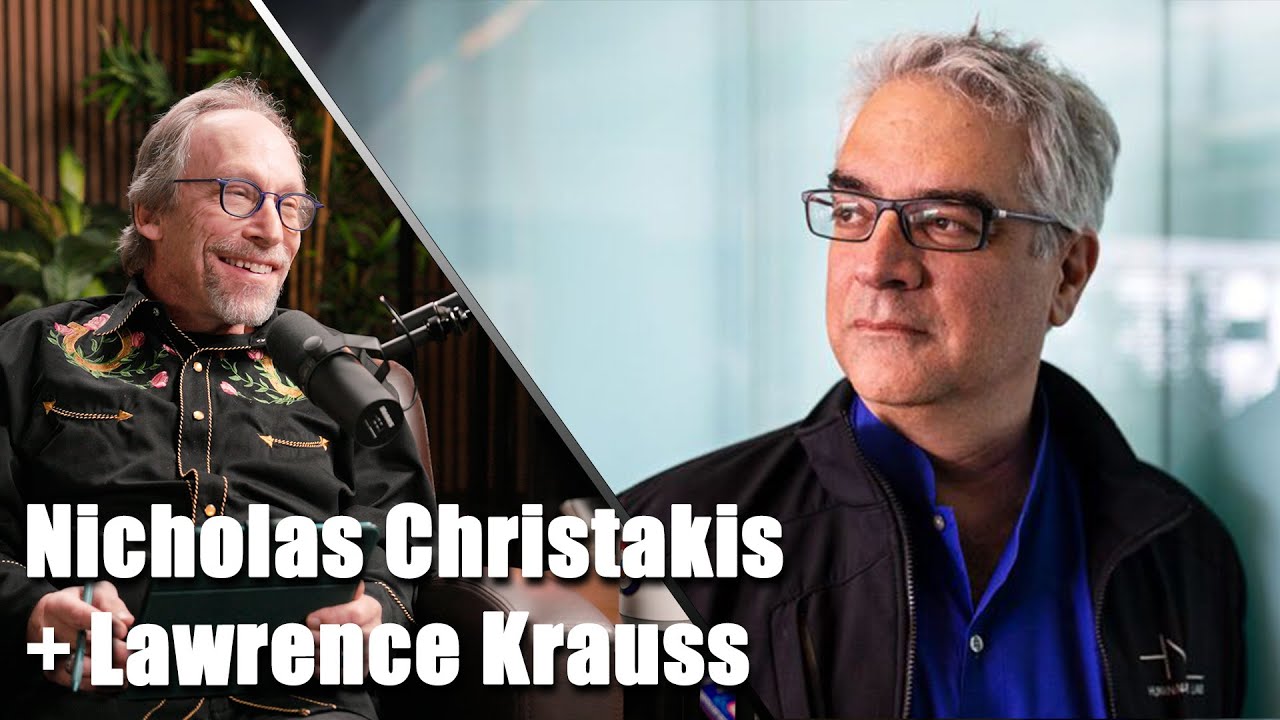
R. Howard Bloch is Sterling professor of French and humanities and Nicholas A. Christakis is Sterling professor of social and natural science at Yale University.
America’s troubled universities face a moment of great pressure to change. Why not use it as an opportunity to remake them for the 21st century?
This would not be the first time that universities have paused to think deeply about what they do and how and why they do it. The Yale Report of 1828 set an agenda for a classical curriculum in service of “the discipline and the furniture of the mind.” After World War I, American college education was redefined again when a few institutions — Columbia, the University of Chicago, St. John’s College — imposed a core curriculum. It happened once more after World War II, when the research university took a leap forward thanks to government support for science and a shift in the shape of undergraduate education. Harvard took the lead with its celebrated “General Education in a Free Society,” or Harvard Redbook, in 1945, and Amherst College followed suit with a “new curriculum.”
Recently, many universities have taken on an explicit mission of improving society or bettering the world and, in so doing, have come to neglect their most fundamental mission, which is the preservation, production and transmission of knowledge. Fulfilling this mission can and does lead to other benefits for society, as education itself is a means to improving human life in the myriad ways that educated citizens are encouraged and equipped to do.
A range of reforms is necessary to respond to this drift. But here are two:
First, universities should reevaluate the curriculum of the various divisions of knowledge, from the humanities to the social sciences to the natural sciences. While universities have become increasingly attentive to a limited set of political objectives, their curricular offerings have grown correspondingly narrow, self-serving or self-perpetuating in ways that inhibit open-ended discussion and discovery.
A step in this direction would involve the creation of a first-year core curriculum — before undergraduates choose a more specialized major. The shared nature of a certain number of required core courses would work to build community via intellectual means rather than by dividing students along gender, race, ethnicity, sexual orientation, class or religion, divisions that have served to weaken rather than strengthen a sense of shared belonging. There is evidence that such an idea may already be gaining popularity among students: This year, 110 students had to be turned away from Yale’s Directed Studies program, a demanding, guided, full-year offering of literature, philosophy, history and political theory that can accommodate just 120 first-year students.
Second, universities should revise the administrative arrangements that support education and research. While retaining the ability to teach classic observations and findings (the “preservation” of knowledge, after all!), the organization of university departments should evolve.
In the biological sciences, departments of anatomy, botany and zoology have largely disappeared. They have been replaced by innovative concentrations in stem-cell biology, neurobiology and molecular biophysics. This can be a model for the whole university. Creating or transforming departments keeps fields relevant to the frontiers of knowledge. We need to match institutional structures to contemporary intellectual challenges.
Moreover, universities need not be organized along strict departmental lines in the first place — an organizational structure that makes reform difficult given the entrenched interests that arise. Here, the model of the California Institute of Technology, which operates across six large scientific divisions, can be valuable even for the humanities. One could imagine, for example, a globalized division of literature that would stress what various literatures have in common rather than the languages that divide them. The University of Chicago’s “committee” system is also instructive; there, entities such as the Committee on Social Thought or the Committee on Human Development have illustrated some of the best crossings between disparate disciplines. These committees span departmental lines and have powers that are essential for real reform, such as granting doctorates and, crucially, appointing faculty.
The humanities and social sciences could even replace departments with broad interest areas such as comparative social institutions, historical analysis, global literature, philosophy and social thought, or international relations. Such a rethinking would likely also attract faculty members whose points of view and preparation are more general and diverse than at present.
So far, much of the response to the current crisis has involved reacting to attacks from without. But a response that begins with the matter of education (and not reactions focused on government funding, institutional neutrality or international enrollment) offers a chance for those responsible for the enterprise of education — the faculty — to seize the initiative in redefining themselves. This is something that should have been undertaken decades ago. But it is not too late for universities to do something radical that might also, by taking charge of the thing they know and do best, do more than anything else to restore public trust in higher education.
Dr. Nicholas Christakis is a leading voice at the intersection of science, society, and policy. His pioneering research on social networks, human behavior, and public health offers powerful insights into how ideas—and ideologies—spread. With a rare ability to translate complex science into compelling storytelling, Dr. Christakis equips audiences with the tools to navigate today’s most pressing challenges. To bring Dr. Christakis to your next speaking engagement, contact us today.